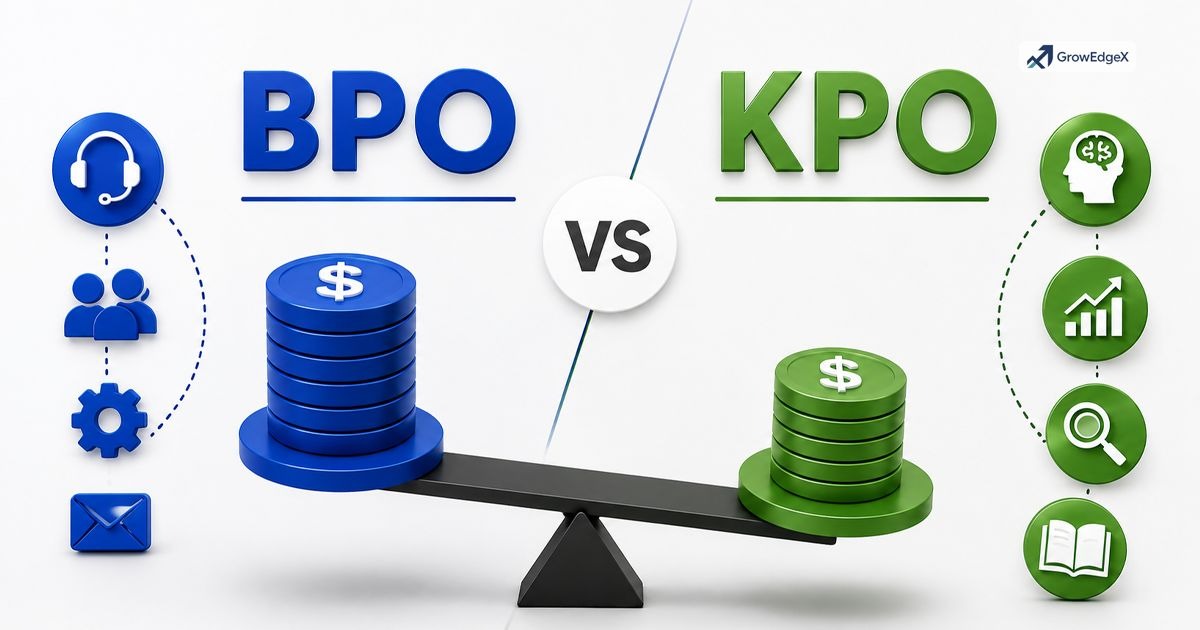
Outsourcing isn’t a single category anymore. Businesses now choose between two very different models, and mixing them up can cost you time and money. The BPO vs KPO question comes up constantly, especially for companies trying to decide whether they need someone to answer phones or someone to analyze data.
Both fall under business process outsourcing in a broad sense, but they solve completely different problems and come with very different price tags. This guide breaks down what separates the two, backs it up with real market data, and shows you exactly how to decide which model your business actually needs.
What Is BPO (Business Process Outsourcing)?
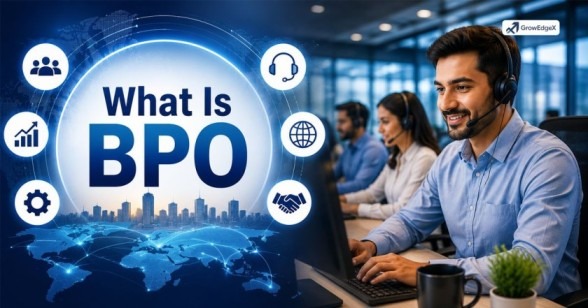
BPO, or business process outsourcing, covers the repeatable, process-driven tasks that keep a business running. Think customer support, appointment scheduling, data entry, and back-office operations. These tasks follow a set process, so agents can be trained quickly and scaled up fast when demand rises.
A BPO provider focuses on volume and consistency. Agents handle high call counts, follow clear scripts, and rely on call center software to keep everything organized.
The value here is speed and cost efficiency, not deep specialized analysis. Most BPO work requires strong communication skills and basic computer literacy, not a professional degree.
What Is KPO (Knowledge Process Outsourcing)?
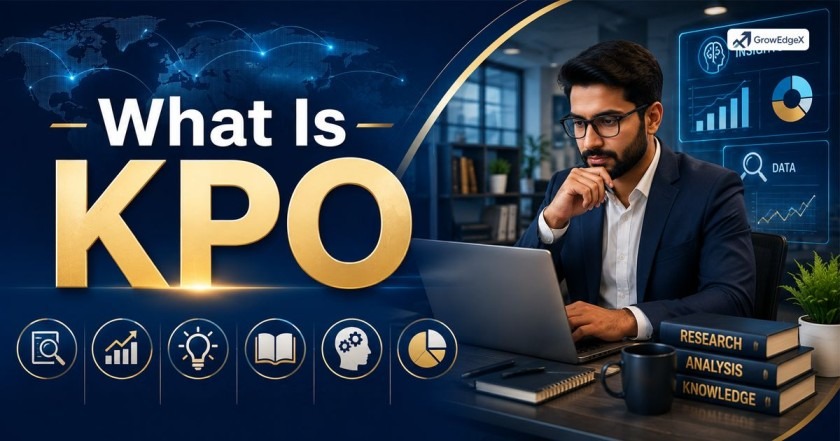
KPO, or knowledge process outsourcing, handles work that requires specialized expertise and judgment. That includes market research, financial analysis, legal research, and data-driven decision-making. KPO professionals aren’t just following a script; they’re applying trained knowledge to solve complex problems.
Because of that, KPO talent usually costs more and takes longer to onboard. A KPO analyst might hold a finance degree, a law license, or years of clinical research training, compared to a BPO agent who learns your process in a matter of days.
KPO is often described as a specialized branch that grew out of BPO once companies realized some outsourced work needed real expertise, not just process discipline.
Where BPO and KPO Came From
Outsourcing started with simple, repetitive tasks. Companies handed off data entry and call handling to cut costs, and that became BPO. As global talent pools grew and more skilled professionals became available overseas, businesses realized they could outsource higher-value work too, not just routine tasks.
That shift gave rise to KPO in the late 1990s and early 2000s, as firms began outsourcing legal research, equity analysis, and engineering design to specialized teams abroad. Today, both models run side by side, often within the same company.
BPO vs KPO: Key Differences at a Glance
The clearest way to see the split is side by side.
| Factor | BPO | KPO |
| Type of work | Repetitive, process-based tasks | Analytical, judgment-based tasks |
| Basis of work | Set rules and scripts | Expertise and interpretation |
| Skill level | Entry to mid-level training | Specialized degrees or certifications |
| Complexity | Lower | Higher |
| Examples | Customer support, data entry, scheduling | Financial analysis, legal research, market research |
| Driving force | Volume | Insight |
| Cost | Lower hourly rates | Higher hourly rates |
| Speed to scale | Fast, days to weeks | Slower, requires vetting expertise |
| Main value | Efficiency and consistency | Strategic insight |
Types of KPO Services You Should Know
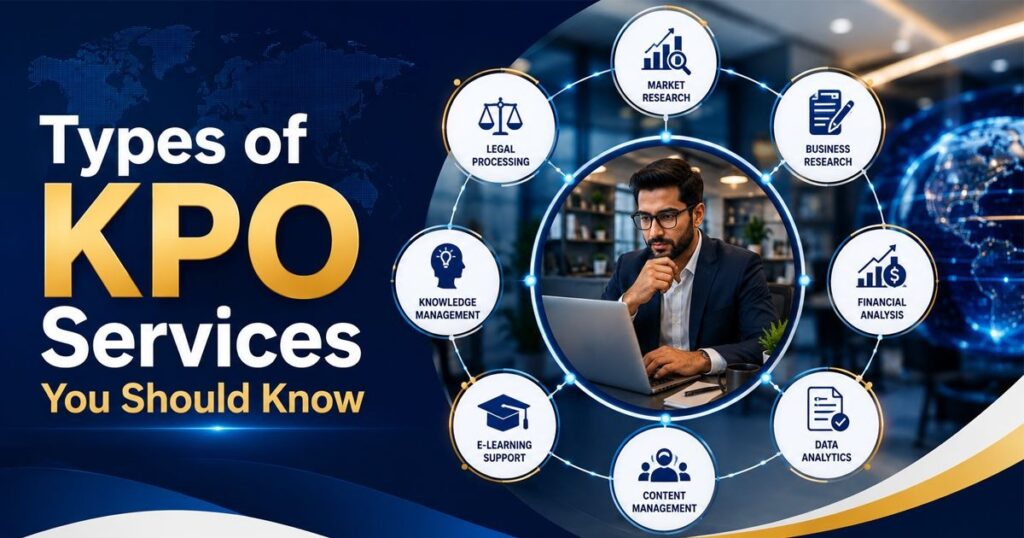
KPO isn’t one single service. It splits into several specialized branches, each targeting a different kind of expert work.
Legal Process Outsourcing (LPO)
LPO covers contract review, legal research, and document drafting, handled by trained legal professionals instead of in-house paralegals. Law firms use this to manage caseloads without hiring full-time attorneys for every research task.
Financial Process Outsourcing (FPO)
FPO handles equity research, financial modeling, and investment analysis. Banks and investment firms use FPO teams to support decision making without expanding their internal analyst headcount.
Research Process Outsourcing (RPO)
RPO covers market research, competitive analysis, and academic or scientific research support. Businesses use this when they need deep, credible data to guide product or strategy decisions.
Explore More Insights: Business process outsourcing services across the USA 2026
BPO vs KPO Market Size and Growth Trends
Both markets are expanding fast, but KPO is growing at a noticeably steeper rate. Industry research from VerifiedMarketResearch values the global KPO market at roughly $78 billion in 2025, with projections putting it near $275 billion by 2033, a compound annual growth rate near 17%. North America already holds a large share of that market, driven by strong demand for financial analytics, healthcare research, and legal outsourcing work.
BPO, by comparison, is a larger and more mature market overall, but grows at a steadier single-digit to low-double-digit pace since it’s already widely adopted across nearly every industry.
Major global players like Genpact, WNS Global, Infosys, Accenture, and EXL Services operate in both spaces, which shows how much the line between BPO and KPO continues to blur as automation and AI take over more of the repetitive workload.
Cost Comparison: BPO vs KPO
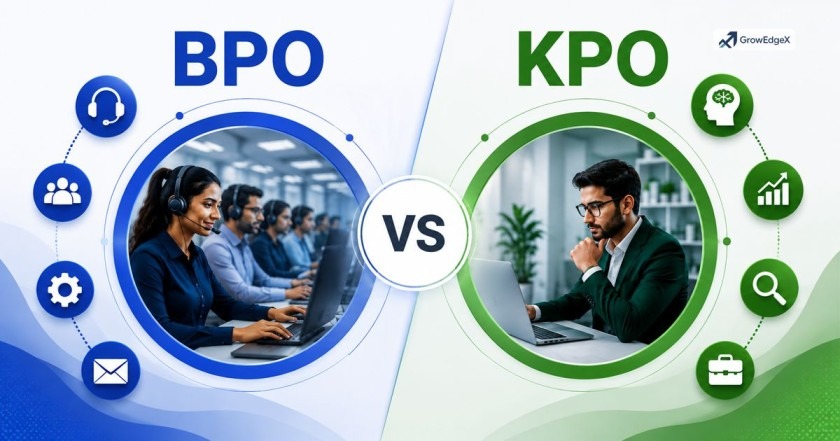
Cost is usually where the decision gets made. BPO services run cheaper because the work doesn’t require advanced degrees or years of niche experience. You’re paying for trained staff who execute a process well and consistently, often at a fraction of what an in-house hire would cost.
KPO services cost more, sometimes significantly more, because you’re essentially renting expert-level thinking. A financial analyst or legal researcher commands a higher rate than a customer support agent, and that gap reflects the depth of knowledge required to do the job correctly. Businesses that try to force KPO-level work into a BPO budget usually end up with lower-quality output and have to redo the work anyway.
Skill Level and Employee Qualifications
BPO roles focus on process fluency. An agent needs to learn your systems, your tone, and your scripts, but doesn’t need years of specialized training to start delivering value. That’s exactly why BPO scales so quickly.
KPO roles work the opposite way. A business hiring KPO services needs someone who already understands the subject matter deeply, whether that’s tax law, actuarial science, or clinical research. You’re not paying for speed here; you’re paying for accuracy and insight that only comes from real, credentialed expertise.
Which Industries Use BPO vs KPO?
Different industries lean toward one model based on what their day-to-day work actually demands. Here’s a closer look at where each one fits best.
Industries That Rely Heavily on BPO
Retail, e-commerce, healthcare intake, and hospitality lean on BPO for customer support services, order processing, and appointment scheduling. These industries deal with high call volumes and repetitive tasks that don’t need specialized analysis, just fast, reliable execution.
Industries That Rely Heavily on KPO
Finance, legal services, biotech, and market research firms lean on KPO for tasks like investment analysis, patent research, and clinical data review. These industries need accuracy and subject-matter depth far more than raw call volume.
How AI Is Changing the Line Between BPO and KPO
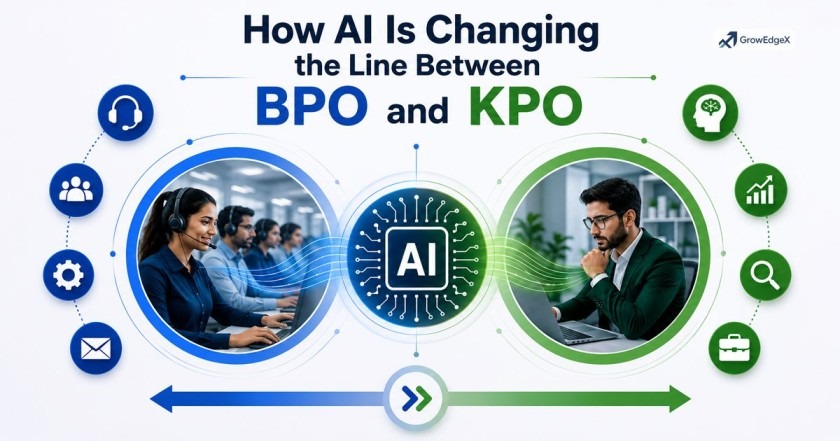
Automation is quietly reshaping both models. Routine BPO tasks like basic data entry and simple call routing increasingly run through AI and chatbots, pushing human agents toward more complex conversations. At the same time, AI tools now help KPO analysts process larger datasets faster, though the final judgment call still comes from a trained human expert.
This shift means the gap between the two models is narrowing in some areas. A modern BPO provider that layers in automation and skilled oversight can now handle tasks that once required a full KPO engagement, which is worth asking any potential provider about directly.
Common Myths About BPO and KPO
Confusion between the two models leads to some persistent myths. Here are the ones worth clearing up before you make a decision.
- KPO is just expensive BPO. The two solve different problems. Paying more for KPO only makes sense when the task actually requires specialized judgment, not just extra budget.
- BPO always means lower quality. A well-managed BPO provider with a dedicated, trained team delivers consistent, high-quality results for the tasks it’s built for.
- KPO providers can handle any complex task. KPO firms specialize by domain. A financial analysis team isn’t automatically qualified for legal research or clinical review.
- Outsourcing means losing control over quality. Clear SLAs, dedicated teams, and regular reporting keep quality visible and measurable, whether the work is BPO or KPO.
- Small businesses can’t afford KPO. Many KPO providers offer project-based pricing, which makes specialized expertise accessible without a full-time contract.
How to Decide: BPO vs KPO Checklist
Start by looking at the actual task, not the department. If the work is repeatable and doesn’t require a specialized degree, BPO is almost always the cheaper, faster choice. Customer service, scheduling, and data entry all fall squarely into this bucket.
If the task involves interpreting data, making judgment calls, or requires licensed expertise, KPO is worth the higher price tag. Ask yourself three questions before deciding: does this task follow a repeatable script, does it require a licensed or highly trained professional, and does getting it wrong carry serious financial or legal risk? A yes to the last two usually points toward KPO.
Can a Business Use Both BPO and KPO Together?
Yes, and many businesses do exactly that. A law firm might outsource intake and scheduling to a BPO team while keeping legal research with a specialized KPO partner. A healthcare company might use BPO for patient scheduling while relying on KPO for clinical data analysis.
Splitting the work this way keeps costs down without sacrificing quality where expertise actually matters. It’s not an either-or decision for most growing businesses, and combining both often delivers the best return on investment.
BPO vs KPO for Texas Businesses
Texas has become a hub for both models, especially across the Dallas-Fort Worth region. Rising local wages make outsourcing appealing for both process-heavy and knowledge-heavy work, since businesses can access trained talent without competing in an increasingly tight local hiring market.
For most small and mid-sized Texas businesses, BPO delivers the fastest return. It covers the day-to-day operational load, customer calls, scheduling, and data entry, without the higher cost structure that KPO work requires.
Businesses that also need specialized support, like legal intake or financial analysis, often pair a local BPO partner with a specialized KPO provider for the more technical work.
How GrowEdgeX Helps You Get the Right Outsourcing Model in Place
Choosing between BPO and KPO gets easier once you know exactly where your operational gaps are. GrowEdgeX, a BPO company based in Plano, Texas, works directly with business owners to map out which tasks actually need outsourcing and which ones don’t.
The process starts with a free operations audit, so you’re not guessing at what to hand off or overpaying for expertise you don’t actually need.
Unlike providers that pull agents from a shared pool, GrowEdgeX builds a dedicated team around your specific processes. That team gets trained on your systems before ever touching a live call, and the entire operation runs under ISO 27001 and ISO 9001 certified standards.
Businesses across Texas and the wider Dallas-Fort Worth area use this model to cut costs without losing service quality.
Where GrowEdgeX Fits on the BPO vs KPO Spectrum
GrowEdgeX operates as a BPO company at its core, built to move fast on the process-driven work most businesses need handled daily. That means call handling, appointment scheduling, and lead qualification run on trained, dedicated teams rather than shared agents pulled from a random queue.
But a few of its specialized intake services sit closer to the knowledge-driven end of the spectrum. Healthcare intake, for example, requires agents trained specifically on HIPAA rules, not just a general script, and legal client intake demands enough familiarity with a firm’s practice areas to qualify leads correctly the first time.
That blend gives clients BPO-level speed and pricing for tasks that would otherwise require a pricier, specialized hire. Businesses that also need bookkeeping, payroll support, or IT workflow automation can bring that under the same roof too, instead of managing separate vendors for each function. If you’re still unsure where your own workload lands on the BPO vs KPO scale, talking it through with GrowEdgeX during a free consultation is a faster way to find out than guessing.
FAQ’s
Is KPO a type of BPO or a separate industry?
KPO is often considered a specialized branch of BPO, since both involve outsourcing business functions. The key difference is that KPO handles knowledge-based, judgment-driven work, while general BPO handles repeatable, process-driven tasks.
What is RPO in outsourcing, and how does it relate to KPO?
RPO, or research process outsourcing, is a subtype of KPO focused specifically on market research, academic research, and competitive analysis. It requires the same level of specialized expertise as other KPO branches.
Can a small business afford KPO services?
Small businesses can access KPO services on a project basis rather than a full-time contract, which keeps costs manageable while still getting access to specialized expertise when needed.
How is AI affecting the future of BPO and KPO?
AI is automating more routine BPO tasks, like basic data entry and simple customer queries, while assisting KPO analysts with faster data processing. Human oversight still drives the final decisions in both models, especially in KPO.
Do BPO and KPO providers use the same technology?
Not always. BPO providers focus on call center software and CRM tools for volume and speed, while KPO providers often use specialized analytics, research, or industry-specific software suited to their expertise.
Conclusion
The BPO vs KPO decision comes down to one question: does the work need volume or expertise? BPO handles the repeatable, high-volume tasks that keep daily operations running smoothly, while KPO delivers the specialized thinking that complex decisions require.
Both markets are growing fast, and the smartest businesses often use a mix of both, splitting tasks based on what actually needs a licensed expert versus what just needs a reliable, well-trained team. Get that split right, and you’ll cut costs without ever sacrificing quality where it counts.