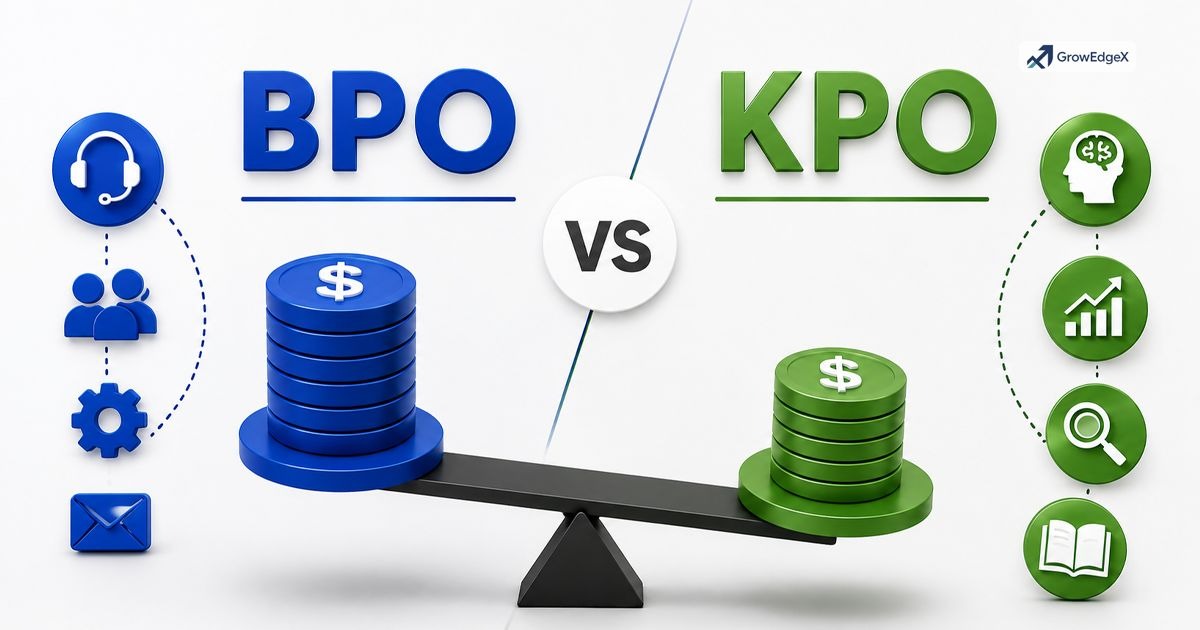
Every growing business hits the same wall eventually. Do you hire and manage your own staff, or do you hand the work to a BPO company that already has the people and systems in place? This is the BPO company vs in-house team debate, and there’s no one-size-fits-all answer.
The right choice depends on your budget, your call volumes, and how fast you need to scale. In this guide, you’ll see the real cost differences, the hidden trade-offs, and how to decide which model actually fits your business.
What Does a BPO Company Actually Do?
A business process outsourcing company, or BPO, takes on the operational work that keeps a business running behind the scenes. That includes customer support outsourcing, appointment scheduling, data entry, bookkeeping, and even sales support. Instead of building a department from scratch, you plug into a team that already knows how to run one.
Most BPO providers bring their own call center software, trained staff, and management layer. You get the output without touching the hiring, training, or day-to-day supervision. For many businesses, that’s the whole appeal. You focus on strategy while someone else handles execution.
What Does an In-House Team Look Like?

Building an in-house customer service team means hiring employees directly, training them on your systems, and managing them under your own roof. You control every detail, from tone of voice to who answers the phone at 9 AM on a Monday.
That control comes at a price, though. Recruiting takes time. Training takes even longer. And once someone’s hired, you’re responsible for salaries, benefits, software licenses, and turnover, whether call volumes are high or slow that month.
It’s a heavier lift, but some businesses need that level of direct oversight, especially when the work touches sensitive or highly regulated information.
BPO Company vs In-House Team: Key Cost Differences
Cost is usually the first question business owners ask, and for good reason. Here’s how the two models typically compare.
| Cost Factor | BPO Company | In-House Team |
| Hiring and recruitment | Included in service fee | Separate cost, ongoing |
| Training | Handled by provider | Your responsibility |
| Salaries and benefits | Bundled into pricing | Full-time payroll cost |
| Software and tools | Usually included | Purchased separately |
| Scaling up or down | Fast, flexible | Slow, requires rehiring |
| Management overhead | Minimal | Requires a supervisor |
An outsourced call center outsourcing services model often costs less overall because you’re not paying for downtime, benefits, or office space. That said, some businesses still find the control of an in-house team worth the higher price tag.
Comparing Flexibility and Scalability
Call volumes rarely stay flat all year. A BPO company can add or remove agents within days, matching staffing to demand without you lifting a finger. That kind of flexible workforce is nearly impossible to replicate in-house without overstaffing during slow months.
In-house teams, on the other hand, take longer to scale. Hiring during a sudden spike means posting jobs, interviewing, and training, all while customers wait. That lag can cost you customers right when you need support the most.
Quality Control: Who Delivers Better Customer Experience?
This is where opinions split. In-house teams know your brand inside and out, since they work with it every day. That familiarity often shows up in smoother customer interactions and fewer misunderstandings.
But a well-managed BPO company closes that gap fast. Providers that assign dedicated agents, not shared ones, train their teams specifically on your process before the first call ever comes in. The key is choosing a partner that treats your account like a real team, not just another client on a spreadsheet.
When Should You Choose a BPO Company?
A BPO company makes sense when call volumes are unpredictable, your budget is tight, or you simply don’t have the bandwidth to manage a support team on top of running the business. It’s also the smarter move if you need 24/7 coverage without paying for a night shift crew of your own employees.
Startups and small businesses benefit the most here. Outsourcing lets you offer professional, round-the-clock support on day one, without the six-month runway it takes to build that internally.
When Does an In-House Team Make More Sense?
Some businesses genuinely need an in-house team. If your work involves highly specialized knowledge that’s hard to hand off, or if company culture and direct oversight matter more than cost savings, keeping things internal might win out.
Larger enterprises with steady, predictable call volumes sometimes find that an in-house team pays for itself over time. It really comes down to whether the control is worth the added cost and management burden.
Hidden Costs Businesses Overlook in Both Models
People compare salary against service fees and stop there, but that’s not the full picture.
| Hidden Cost | BPO Company | In-House Team |
| Employee turnover | Provider’s problem, not yours | Recruiting and retraining costs |
| Office space and equipment | Not needed | Desks, phones, software licenses |
| Sick days and PTO coverage | Built into provider staffing | You need backup coverage |
| Compliance and security certifications | Often already certified | You build this yourself |
These overlooked costs often tip the decision more than people expect going in.
Explore More: What is business process outsourcing services across the USA 2026
BPO Company vs In-House Team: Which Wins for Texas Businesses?
Businesses across Texas, especially in fast-growing markets like Dallas-Fort Worth, face a specific challenge. Local hiring pools are competitive, and wages keep climbing. That makes an outsourced BPO company an especially strong option for Texas businesses that want quality support without competing for local talent in an already tight job market.
For companies that still want a US-based point of contact but need cost efficiency behind the scenes, a hybrid setup, US-based leadership paired with a trained outsourced team, often delivers the best of both worlds.
How GrowEdgeX Helps You Make the Right Choice
You don’t have to guess your way through this decision. GrowEdgeX is a BPO company headquartered in Plano, Texas, built specifically for businesses trying to decide between hiring in-house or outsourcing the work. Instead of pushing a one-size-fits-all package, the team starts with a free operations audit to figure out exactly where your current setup is losing time, leads, or money.
From there, GrowEdgeX assigns a dedicated team trained on your process, not a shared pool of agents juggling other clients. Most businesses go live within about two weeks, backed by ISO 27001 and ISO 9001 certified security and quality standards. That means you get the cost savings of outsourcing without giving up the reliability an in-house team is supposed to provide.
Core Services GrowEdgeX Offers as Your Outsourced Partner
GrowEdgeX covers customer support and call handling, appointment scheduling, and lead qualification for sales teams that need faster follow-up. Beyond general support, the company runs specialized intake for healthcare practices under HIPAA-compliant protocols, plus legal client intake for law firms that can’t afford to miss a lead.
Bookkeeping, payroll support, and IT workflow automation round out the offering, so businesses can outsource far more than just phone calls if they choose to. If you’re weighing your options right now, booking a free consultation with GrowEdgeX is the fastest way to get a real cost comparison instead of a guess.
FAQ’s
Is outsourcing to a BPO company cheaper than hiring in-house?
In most cases, yes. A BPO company bundles salaries, training, software, and management into one predictable fee, which usually costs less than the full expense of hiring and maintaining an in-house team.
Can a BPO company handle industry-specific work like healthcare or legal intake?
Yes, but only if the provider is properly certified. Look for a BPO company with HIPAA-compliant processes for healthcare work and experience specifically in legal intake if that’s your industry.
How long does it take to switch from an in-house team to a BPO company?
Most providers can launch a dedicated team within two to four weeks after an initial audit, depending on how complex your processes are and how much training the new team needs.
Will customers notice a difference if I switch to an outsourced team?
Not if the transition is handled correctly. A good BPO company trains agents on your specific tone, scripts, and systems before taking a single live call, so the experience stays consistent for your customers.
What size business benefits most from outsourcing instead of hiring in-house?
Small and mid-sized businesses see the biggest benefit, since they often can’t justify the cost of a full in-house team but still need professional, reliable support to keep customers happy.
Conclusion
The BPO company vs in-house team decision isn’t about which model is universally better. It’s about which one fits your budget, your call volumes, and how much control you actually need day to day.
Outsourcing wins on cost, speed, and flexibility for most growing businesses. An in-house team wins when specialized oversight matters more than savings. Whichever direction you’re leaning, run the numbers on both before you commit, because the wrong choice here gets expensive fast.