Every growing business hits a wall. More work, same team, same hours. That’s exactly where the pros and cons of outsourcing become a real conversation worth having. Outsourcing lets companies hand off specific tasks to outside experts, often at a fraction of in-house costs. Done right, it frees your team to focus on what actually drives revenue.
Done wrong, it creates headaches you didn’t sign up for. Whether you’re a Texas-based startup or a Dallas–Fort Worth company, this guide clearly explains what outsourcing can and cannot do for your business in 2026.
Why Do Companies Outsource?
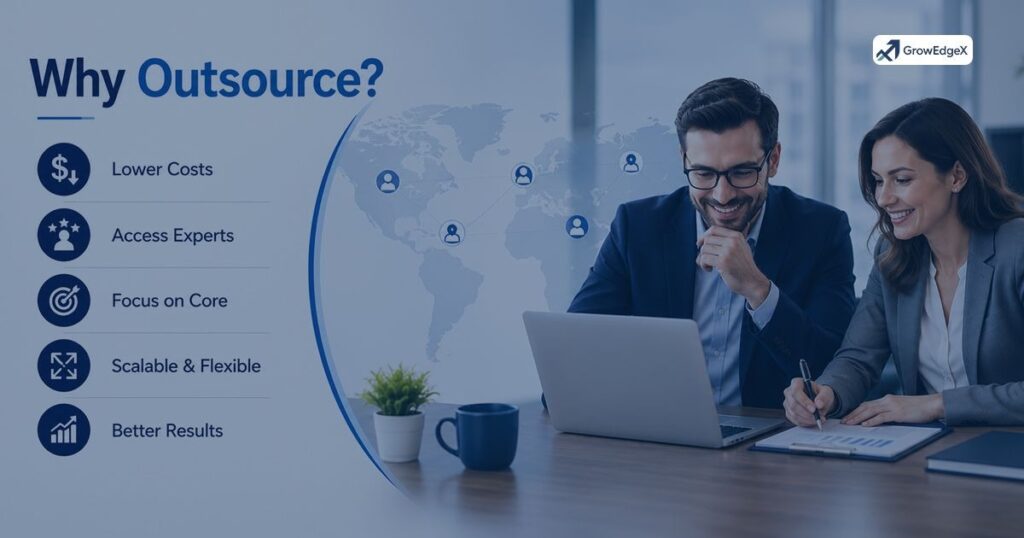
Companies outsource for one main reason: they want to do more with less. When overhead costs pile up and hiring full-time staff isn’t practical, external providers step in to fill the gap. You get specialized skills without the capital investment that comes with building an internal team from scratch.
Think about it this way. A law firm in Dallas probably doesn’t need a full-time IT department. But they do need reliable tech support. That’s where external service providers come in. They handle the technical side so the lawyers stay focused on billing hours. Smart outsourcing decision-making starts with knowing what your team does best and letting someone else handle the rest.
Is Outsourcing Good or Bad?
Honestly? It depends on how you use it. Outsourcing is a tool, not a magic fix. When it aligns with your business goals and long-term strategy, it delivers real results. When it’s rushed or poorly managed, it creates more problems than it solves.
The verdict from most US businesses is this: outsourcing works when you treat your vendors like partners, not just cheaper alternatives. A solid outsourcing strategy means setting clear expectations, choosing the right partners, and reviewing performance regularly. So before you sign any contract, ask yourself whether you’re doing this to grow or just to cut corners.
Key Pros of Outsourcing
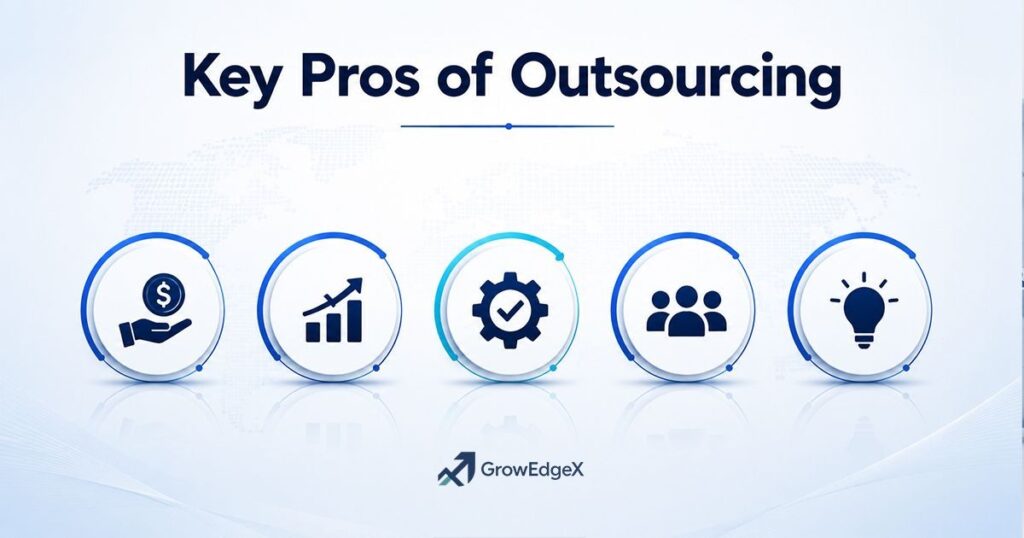
Outsourcing benefits go far beyond saving a few dollars. It’s about building a leaner, faster, and more capable business. From cost reduction to gaining access to expertise you couldn’t afford in-house, the advantages stack up quickly when your outsourcing planning is tight.
Here’s a quick snapshot of how outsourcing delivers value across different areas:
| Benefit | What It Means for Your Business |
| Cost Savings | Lower payroll and overhead costs |
| Speed | Faster product and service delivery |
| Talent Access | Global, specialized providers |
| Scalability | Grow without heavy capital investment |
| Focus | Keep your team on core business functions |
Lower Payroll Costs
Hiring full-time staff is expensive. Salaries, benefits, taxes, and training all add up fast. Cost-reduction outsourcing lets you pay for specific work without the full-time price tag. You get the output without the overhead costs that come with a permanent employee on payroll.
Reduced Infrastructure Expenses
You don’t need to buy more office space or equipment to grow. External service providers bring their own tools and workspace. This means you skip the heavy capital investment that in-house scaling typically demands. Leaner operations, bigger results.
Optimized Resources
Business resource optimization is about putting every dollar and hour where it counts most. When you outsource routine or specialized tasks, your in-house team can focus on strategy and revenue-driving activities. That’s a smarter use of what you already have.
Increased ROI
Less spending on non-core tasks means more budget for what actually drives growth. Business performance improvement through outsourcing isn’t just theory. Companies that outsource smartly often see higher returns in shorter timeframes because they spend less and get more done simultaneously.
24-Hour Production
One of the most underrated perks is round-the-clock output. With offshore outsourcing teams working across different time zones, your business essentially never sleeps. Work gets done while your local team is offline. That’s a genuine competitive edge in fast-moving market conditions.
Higher Team Productivity
When your in-house staff isn’t buried in low-priority tasks, they perform better. Delegating business tasks to external teams clears the plate. Your people focus on what they’re great at and that shows directly in the quality of their output.
Access to Advanced Equipment and Global Talent
Some tools and skills are too expensive to build internally. Specialist providers already have the advanced tech and trained talent you need. This gives you instant access to expertise without a lengthy recruiting timeline or heavy training investment.
Faster Time to Market
Speed matters in business. In competitive markets, getting your product or service to market faster can be the difference between winning and losing. Outsourcing accelerates timelines by plugging into teams that are already up and running from day one.
Scalable, Budget-Friendly Growth
Need to scale up for a busy season, then pull back afterward? Outsourcing flexibility makes that easy. You’re not locked into fixed headcount or capital investment. You scale based on actual demand, not projections, which protects your cash flow.
On-Demand Expert Support
Whether it’s legal intake, bookkeeping, or IT helpdesk, you get expert help exactly when you need it. Efficiency services on demand mean you don’t pay for idle time. You pay for results, and that changes how your whole budget performs.
Understanding the Cons of Outsourcing
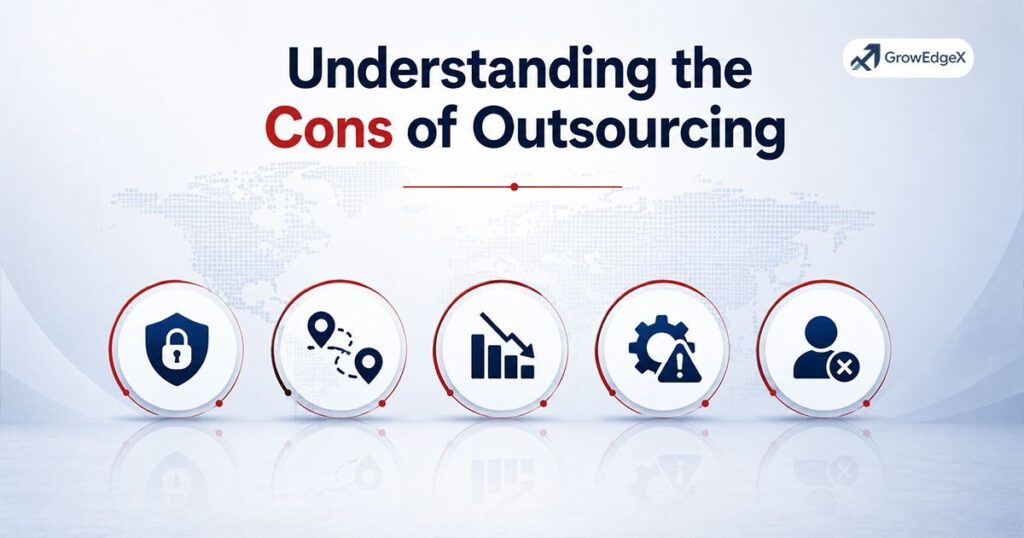
No strategy is perfect. Knowing the risks upfront gives you a serious advantage. The cons of outsourcing are real, and they’ve derailed more than a few businesses that moved too fast without thinking things through carefully.
Before you hand off any core business functions, make sure you understand what you’re walking into. Poor vendor management and weak contracts are where most outsourcing decision-making falls apart.
Lack of Transparency and Oversight
When work happens outside your office, visibility drops. Management challenges increase when you can’t see daily operations firsthand. Without clear reporting structures and regular check-ins, critical tasks fall through the cracks, and nobody catches it until damage is done.
Loss of Quality Standards
Not every vendor matches your standards. Service delivery issues creep in when expectations aren’t locked down from the start. If quality suffers, your customers feel it first, and your brand reputation pays the price long after the contract ends.
Communication Challenges
Time zone differences, language barriers, and cultural barriers all make coordination harder. Communication challenges between your team and an offshore partner can slow projects down and create costly misunderstandings that set timelines back significantly.
Limits Innovation and Iteration
When a third party handles a core process, you lose some control over how it evolves. Contract limitations often make it harder to pivot quickly. Innovation slows when business activities are locked into rigid vendor agreements that weren’t designed with flexibility in mind.
Supply Chain Complexities
Outsourcing adds layers. More vendors means more moving parts. Without solid supply chain knowledge and strong supplier management, disruptions spread fast. Supplier instability in one part of the chain can ripple through your entire operation before you even see it coming.
Reputation Risks
If your outsourcing partner underperforms or acts unethically, your brand absorbs the damage. Customers don’t always separate the vendor from the business. They see your name on the product or service, and that’s who they hold responsible.
Security and IP Risks
This is a big one. Data security risks and confidentiality issues rank among the top concerns for US businesses outsourcing today. Sensitive data exposure through a third-party vendor can trigger serious legal and financial consequences. Offshore outsourcing risks are especially real when data protection laws vary widely across countries.
How Does Outsourcing Influence Workplace Culture?
Outsourcing changes how teams work and sometimes for the better. When employees aren’t buried in repetitive tasks, morale often improves. Business task delegation to external providers can lift energy levels and give your internal staff room to focus on more meaningful, strategic work.
However, it also creates uncertainty if leadership doesn’t manage the message well. Some employees worry outsourcing threatens their jobs. Transparent communication is key here. When your team understands the long-term strategy and sees outsourcing as a growth tool rather than a replacement threat, the cultural shift tends to be positive and lasting.
Explore More: Key Difference Between Outsourcing and Offshoring
Tips for Businesses Considering Outsourcing
Before you outsource anything, do your homework. A rushed outsourcing planning process is the number one reason businesses end up with bad vendor experiences and unexpected hidden costs. Start small, test a vendor on a low-stakes project, and build trust before scaling up.
| Step | Action |
| 1 | Define what to outsource and why |
| 2 | Research and shortlist reputable vendors |
| 3 | Check references and past client results |
| 4 | Set clear KPIs and reporting expectations |
| 5 | Run a pilot project before full commitment |
| 6 | Review vendor performance every quarter |
Good vendor management is never set-and-forget. Stay involved, give honest feedback and hold your partners accountable. That’s the only way outsourcing delivers lasting returns.
Benefits of IT Outsourcing
IT outsourcing is one of the fastest-growing choices for US businesses right now. You get access to expertise in cybersecurity, cloud management, software development, and helpdesk support without building an entire internal department. Hidden costs in tech hiring, like training cycles, employee turnover, and hardware upgrades, disappear when you work with a capable IT partner.
Beyond cost savings, IT outsourcing brings speed and reliability. Your systems get maintained, updated, and secured faster. For small and mid-sized companies especially, this levels the playing field with larger competitors who have full in-house tech teams and deep budgets.
Benefits of Outsourcing Accounting Services
Numbers need to be right, every single time. Outsourcing your accounting puts your books in the hands of professionals who do this every day. You reduce errors, stay tax-compliant, and get cleaner financial reporting without hiring a full-time CFO. For US businesses watching their overhead costs, outsourced bookkeeping is one of the smartest financial decisions you can make.
It also gives you real-time financial insight on demand. Firms like Nexus Accounting and Taxation in Plano, TX help businesses get their finances tight so owners can make faster, smarter decisions backed by accurate data, not guesswork.
GrowEdgeX: Your Partner for Scalable Business Operations
GrowEdgeX helps US businesses outsource the right way. From healthcare and legal intake to bookkeeping, IT automation, and full-scale BPO operations, we deliver fully managed efficiency services that are live in as little as 14 days. No guesswork. No drawn-out onboarding. Just capable teams handling your core business functions so you can focus on what grows your business.
If you’re weighing the outsourcing benefits and want a partner that actually delivers, GrowEdgeX is built for exactly that. Your 14-day launch starts with one call.
FAQ’s
What is the biggest risk of outsourcing manufacturing?
Loss of quality control and data security risks are the top concerns. Always vet vendors carefully, use strong contracts, and build in regular quality audits from the start.
Does outsourcing actually save money?
Yes, when done right. Cost-reduction outsourcing works best when you account for all costs upfront, including hidden costs like communication overhead and ongoing vendor management time.
Is offshore outsourcing a good idea for small US businesses?
It can be. Offshore outsourcing offers significant cost advantages but comes with real offshore outsourcing risks like cultural barriers, language barriers, and data compliance issues. Start with a small pilot and scale carefully.
How do I choose the right outsourcing partner?
Look for proven experience, transparent pricing, and clear communication. Strong supplier management practices and regular performance reviews are non-negotiable. A good partner acts like an extension of your team, not just a vendor.
Conclusion
The pros and cons of outsourcing aren’t a mystery. They’re a decision framework. When you match the right tasks to the right external providers, outsourcing becomes one of the smartest moves a growing business can make.
When it’s rushed or poorly planned, it creates the very inefficiencies you were trying to fix. The goal isn’t just cutting costs. It’s building a business that runs better, scales faster, and delivers more value to your customers. Use this guide as your starting point, stay intentional, and choose partners who are as invested in your results as you are.