If you run a business in Plano, Texas today, you’ve probably heard a dozen different marketing buzzwords thrown around in the same meeting. Understanding the real types of marketing helps you cut through that noise and pick strategies that actually grow your business.
This guide walks through every major type of marketing, explains what each one does best, and shows you how to build a marketing plan that fits your goals. Whether you’re new to business or sharpening an existing strategy, you’ll leave with a clear, practical view of what is marketing and how it works.
What is marketing?
Marketing is the process of connecting a product or service with the people who need it. It covers everything from research and audience targeting to advertising, sales support, and customer engagement after the purchase.
At its core, marketing answers one question: how do you get the right message to the right person at the right time? That’s the real marketing definition most professionals use today, and it goes far beyond just running ads.
Good marketing drives brand awareness, builds trust, and creates a steady stream of lead generation for a company. The importance of marketing shows up in nearly every part of a business, since sales, customer service, and even product design often depend on what marketing teams learn about buyers. In short, marketing plays the role of marketing in business growth that almost nothing else can replace.
25 types of marketing
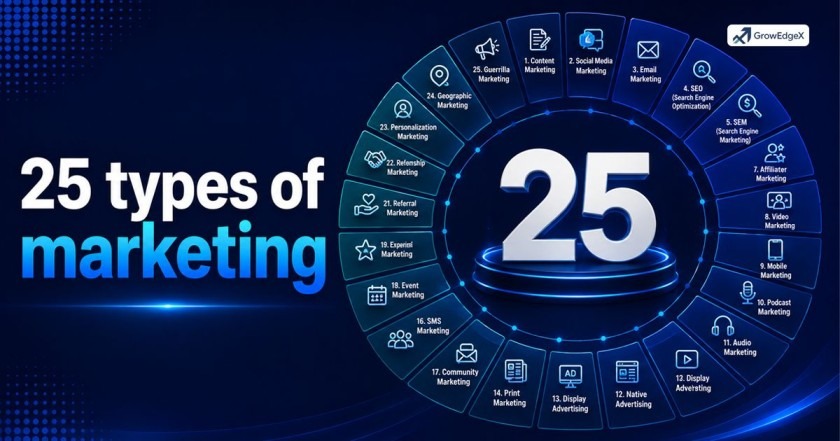
Marketing isn’t one single activity. It’s a toolbox, and different marketing techniques work better for different goals, budgets, and audiences. Below is a quick list of 25 types of marketing that businesses use today, followed by a deeper look at each one.
| # | Type of Marketing | Best For |
| 1 | B2C marketing | Selling directly to consumers |
| 2 | B2B marketing | Selling to other businesses |
| 3 | Outbound marketing | Reaching a broad, cold audience |
| 4 | Personalized marketing | Boosting conversion with tailored offers |
| 5 | Direct mail | Local and highly targeted campaigns |
| 6 | Partner marketing | Sharing audiences with another brand |
| 7 | Telemarketing | Direct, real-time sales conversations |
| 8 | Public relations (PR) marketing | Building credibility and press coverage |
| 9 | Word of mouth marketing | Turning happy customers into promoters |
| 10 | Stealth marketing | Subtle, non-traditional brand exposure |
| 11 | Brand marketing | Long-term brand awareness |
| 12 | Cause marketing | Connecting with values-driven buyers |
| 13 | Inbound marketing | Attracting buyers through helpful content |
| 14 | Search engine marketing | Getting found on Google fast |
| 15 | Content marketing | Building trust through education |
| 16 | Affiliate marketing | Performance-based promotion |
| 17 | Social media marketing | Community building and engagement |
| 18 | Email marketing | Direct, low-cost lead nurturing |
| 19 | Mobile marketing | Reaching people on their phones |
| 20 | Influencer marketing | Borrowing trust from creators |
| 21 | Guerrilla marketing | Low-budget, high-creativity campaigns |
| 22 | Viral marketing | Rapid, shareable brand exposure |
| 23 | Relationship marketing | Long-term customer loyalty |
| 24 | Niche marketing | Serving a narrow, specific audience |
| 25 | Video marketing | Visual storytelling and product demos |
1. B2C marketing
B2C, or business-to-consumer marketing, targets individual buyers rather than companies. It usually leans on emotion, convenience, and quick decision-making since consumers often buy on impulse or personal need. A clothing brand running a summer sale on Instagram is a classic example of B2C marketing in action.
‘This type of marketing relies heavily on strong marketing communication and eye-catching marketing campaigns that speak directly to everyday problems and desires.
2. B2B marketing
B2B, or business-to-business marketing, targets companies instead of individual shoppers. Buyers here take longer to decide, often involve several decision-makers, and care more about ROI than emotion.
A software company marketing project management tools to enterprise clients relies on case studies, whitepapers, and detailed demos rather than flashy ads. Business marketing at the B2B level tends to focus on relationships, trust, and long sales cycles.
Most common types of traditional marketing
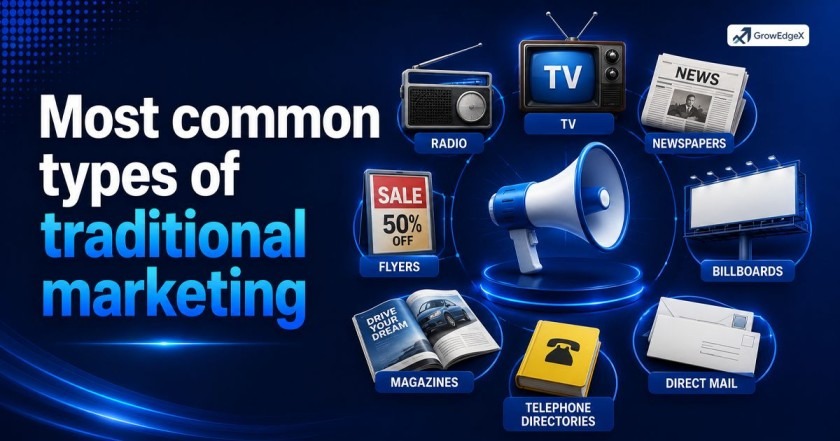
Traditional marketing existed long before the internet, and it still works well for many businesses today. These offline marketing methods often build strong local presence and trust, especially for companies that rely on in-person customers.
Even in a digital-first world, traditional advertising strategies remain useful for local businesses, healthcare providers, and law firms across Plano, Texas. They pair especially well with digital efforts as part of a bigger, blended marketing plan.
3. Outbound marketing
Outbound marketing pushes a message out to a broad audience, whether they asked for it or not. Think TV commercials, radio spots, cold calls, and billboard ads. It’s one of the oldest marketing methods for companies, and while it can feel intrusive, it still builds fast brand recognition when budgets allow for wide reach.
4. Personalized marketing
Personalized marketing tailors messages, offers, or content to a specific person based on their behavior or preferences. A retailer sending a discount code for the exact shoes you browsed last week uses personalized marketing. This approach boosts customer engagement because people respond better to offers that feel made just for them.
5. Direct mail
Direct mail sends physical materials, like postcards or catalogs, straight to a customer’s mailbox. It sounds old-fashioned, but it still performs well for local businesses and services. A dentist mailing a coupon to nearby households is a simple example of direct mail marketing that drives real foot traffic.
6. Partner marketing
Partner marketing happens when two brands team up to promote each other to their combined audiences. A gym partnering with a local smoothie shop for a joint discount is a good example. This is one of the most cost-effective promotional strategies since both businesses share the marketing load and the reach.
7. Telemarketing
Telemarketing uses phone calls to sell products, generate leads, or gather feedback directly from customers. It’s direct and personal, though it requires skilled staff to avoid sounding pushy. Many insurance and financial service companies still use telemarketing as part of their lead generation efforts.
8. Public relations (PR) marketing
PR marketing focuses on earning media coverage and public trust rather than paying for ads. A tech startup landing a feature in a major business publication is using PR marketing to build credibility. It’s less about direct sales and more about shaping how the public sees a brand over time.
9. Word of mouth marketing
Word of mouth marketing happens when satisfied customers recommend a business to friends, family, or coworkers. It’s one of the most trusted marketing tactics because people believe personal recommendations more than ads. Referral programs and exceptional customer service both fuel this type of marketing naturally.
10. Stealth marketing
Stealth marketing promotes a product without the audience realizing they’re being marketed to. Product placement in a movie or a subtle mention in a podcast are common examples. It works because it feels organic rather than like a traditional ad, which makes it one of the more creative marketing techniques available.
11. Brand marketing
Brand marketing builds long-term recognition and emotional connection rather than pushing a single sale. Coca-Cola’s holiday commercials are a textbook case of brand marketing, since they rarely mention a specific product feature at all. This type of marketing strengthens brand awareness over years, not days.
12. Cause marketing
Cause marketing links a company’s products or services to a social or environmental cause. TOMS Shoes donating a pair for every pair sold is a well-known cause marketing example. It appeals to buyers who care about values, making it a smart part of modern advertising strategies for many U.S. brands.
Popular forms of digital marketing
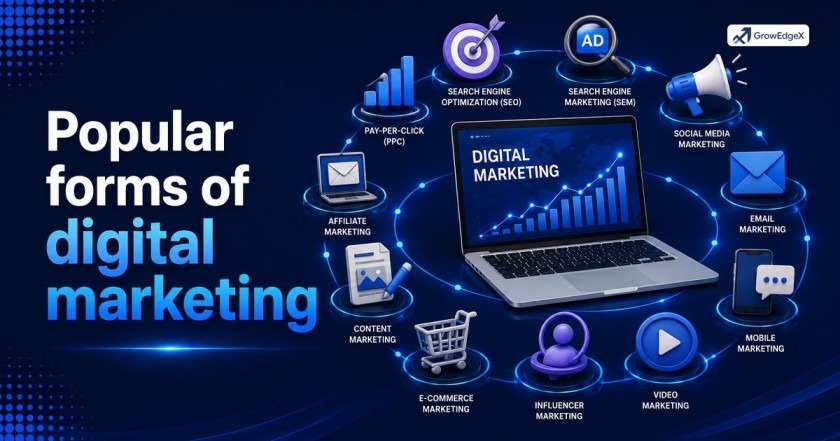
Online marketing now makes up the bulk of most companies’ budgets, and for good reason. It’s measurable, flexible, and often cheaper than traditional methods. Comparing digital vs traditional marketing, digital channels usually offer faster feedback and easier testing, which is why so many businesses lean on them for both awareness and direct product promotion.
That said, digital marketing isn’t one single tactic. It’s a whole family of marketing channels, each suited to different goals, from immediate sales to long-term trust building.
13. Inbound marketing
Inbound marketing attracts customers by offering value first, like helpful blog posts, guides, or free tools, instead of interrupting them with ads. A company publishing a detailed how-to guide that ranks on Google is using inbound marketing to pull in interested buyers naturally.
14. Search engine marketing
Search engine marketing, often called SEM, uses paid ads to appear at the top of search results. A local plumber running Google Ads for “emergency plumber near me” is a strong example. It delivers fast visibility, which makes it a go-to choice for businesses that need quick lead generation.
15. Content marketing
Content marketing creates and shares valuable material, such as articles, videos, or podcasts, to attract and educate an audience. Unlike ads, content marketing builds trust over time and supports nearly every stage of the marketing funnel, from awareness to decision.
16. Affiliate marketing
Affiliate marketing pays partners a commission for driving sales or leads through their own promotion efforts. Amazon’s affiliate program is one of the biggest examples in the world. It’s a performance-based approach, so businesses only pay when the marketing actually works.
17. Social media marketing
Social media marketing uses platforms like Instagram, TikTok, and LinkedIn to build community, share content, and run ads. It’s one of the fastest-growing marketing channels because it combines organic reach with precise audience targeting through paid promotion.
18. Email marketing
Email marketing sends targeted messages directly to a subscriber’s inbox. It remains one of the highest-ROI marketing tools available, especially for nurturing leads who aren’t ready to buy yet. A well-timed email sequence can quietly move someone through the entire marketing funnel.
19. Mobile marketing
Mobile marketing reaches people through smartphones using SMS texts, app notifications, or mobile-optimized ads. Since most U.S. consumers browse on their phones, this type of marketing has become essential for real-time customer engagement and time-sensitive offers.
20. Influencer marketing
Influencer marketing partners with social media creators to promote a product to their followers. A skincare brand sending products to a beauty influencer for a review is a common example. It borrows trust that would otherwise take years to build organically.
21. Guerrilla marketing
Guerrilla marketing uses unconventional, low-cost tactics to create a memorable impression, often in public spaces. A chalk art installation outside a coffee shop is a simple, creative form of guerrilla marketing that generates buzz without a big budget.
22. Viral marketing
Viral marketing designs content specifically to be shared rapidly across social networks. A funny or emotional video that spreads organically across platforms is viral marketing at work. It’s unpredictable, but when it hits, it delivers massive brand awareness almost overnight.
23. Relationship marketing
Relationship marketing focuses on keeping existing customers happy rather than constantly chasing new ones. Loyalty programs and personalized follow-ups are common examples. This type of marketing pays off through repeat purchases and stronger long-term customer engagement.
24. Niche marketing
Niche marketing targets a very specific, well-defined audience instead of trying to appeal to everyone. A brand selling running shoes exclusively for ultramarathon runners is practicing niche marketing. It often leads to less competition and stronger loyalty within that smaller target audience.
25. Video marketing
Video marketing uses video content, from YouTube ads to short-form social clips, to explain, entertain, or sell. It’s one of the most engaging marketing channels today because video communicates emotion and detail faster than text alone.
2 ways to do event marketing
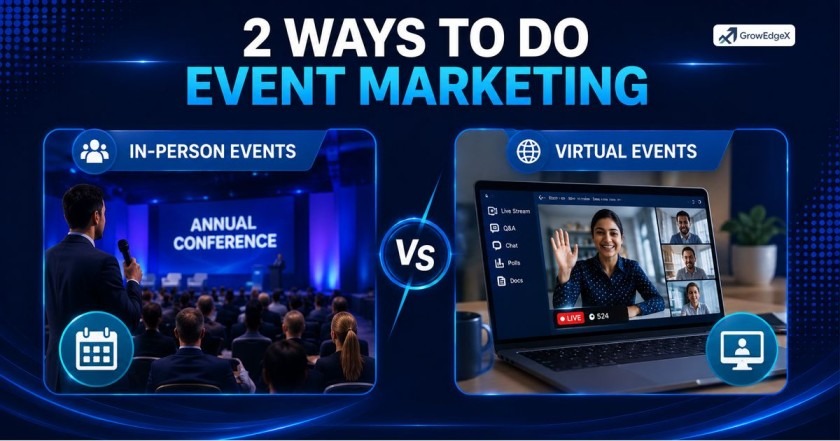
Event marketing brings a brand directly into a physical or virtual experience with potential customers. It works well because people remember experiences far longer than they remember ads. Businesses generally lean on two main approaches to make events effective, and each one builds customer engagement differently.
1. Experiential marketing
Experiential marketing creates a hands-on experience that lets people interact with a brand in person. A pop-up shop where visitors can test a new product before it launches is a good example. It leaves a strong impression because people remember how something felt, not just what it looked like in an ad.
2. Interactive marketing
Interactive marketing invites the audience to participate directly, often through quizzes, polls, contests, or live Q&A sessions. A brand hosting a live Instagram poll to choose its next product flavor is using interactive marketing to boost engagement while gathering real feedback at the same time.
Read More:
The differences between B2B and B2C marketing
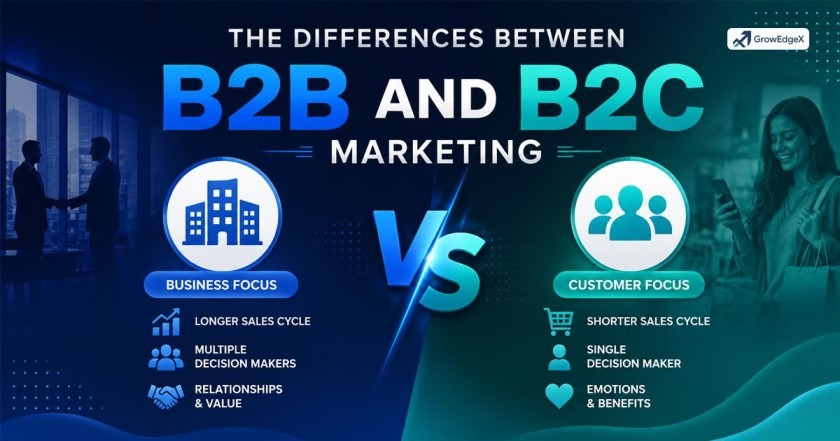
B2B vs B2C marketing comes down to who’s making the decision and why. B2B buyers usually move slowly, involve multiple stakeholders, and care most about efficiency and return on investment. B2C buyers tend to decide faster and respond more to emotion, price, and convenience.
The table below breaks down the core differences that shape how each marketing strategy guide gets built.
| Factor | B2B Marketing | B2C Marketing |
| Decision maker | Multiple stakeholders | Individual buyer |
| Sales cycle | Long, often months | Short, sometimes minutes |
| Main driver | ROI and efficiency | Emotion and convenience |
| Content style | Detailed, data-driven | Simple, visual, engaging |
| Common channels | LinkedIn, email, webinars | Instagram, TikTok, search ads |
How to choose the right marketing strategy for your business
Choosing the right strategy starts with knowing your target audience and what problem you actually solve for them. From there, look at your budget, your industry, and how fast you need results. A local service business often benefits from a mix of local SEO, direct mail, and social media, while a software company might lean harder into content marketing and email nurturing.
It also helps to think in terms of campaign management rather than isolated tactics. Test one or two channels first, measure results carefully, then scale what works. Most successful businesses in the U.S. blend a few marketing techniques together instead of relying on just one, since audiences today move across multiple marketing channels before they ever make a purchase.
Organize and manage your marketing with GrowEdgeX
Running a solid marketing plan takes more than good ideas. It takes execution, follow-up, and systems that don’t fall apart the moment things get busy. This is where GrowEdgeX comes in. GrowEdgeX is a Plano, Texas-based operations partner that helps growing businesses in healthcare, legal, accounting, and other industries run their back office without the overhead of building an in-house team.
Through its BPO and sales division, GrowEdgeX supports the execution side of marketing that many businesses struggle to keep up with. That includes dedicated outbound sales agents who manage prospecting and pipeline follow-up, 24/7 customer support that keeps leads warm across multiple channels, and real-time reporting on campaign performance and conversions.
In practice, that means your lead generation efforts don’t go cold just because your team is stretched thin. Instead of chasing intake calls or losing track of follow-ups, businesses partnering with GrowEdgeX get a dedicated system built around campaign management and steady customer engagement, so leads actually turn into paying clients.
Frequently asked questions about types of marketing
What are the 4 Ps of marketing?
The 4 Ps stand for Product, Price, Place, and Promotion. Together, they form the classic framework for building any marketing strategy guide.
| P | Meaning |
| Product | What you’re selling and why it matters |
| Price | How much customers pay and why it’s fair |
| Place | Where and how customers can buy it |
| Promotion | How you communicate value to buyers |
What’s the difference between marketing and advertising?
Marketing covers the entire process of researching, positioning, and promoting a product, while advertising is just one part of that process. Advertising is the paid promotion; marketing is the full strategy behind it.
How many types of marketing are there?
There’s no fixed number, since new marketing trends and channels keep emerging. This guide covers 25 of the most important types, though businesses often combine several at once.
What type of marketing is most effective?
There’s no single best answer. Effective marketing depends on your target audience, budget, and goals. Most businesses see the best results by combining a few complementary marketing methods for companies rather than relying on just one channel.
How Has Technology Impacted Marketing and Marketing Strategies?
Technology has made marketing faster, more measurable, and far more personal. Tools now track buyer behavior in real time, which lets companies adjust marketing campaigns on the fly instead of waiting weeks for results.
In What Ways Are AI and Automation Being Used in Marketing?
AI now powers everything from chatbots and email automation to ad targeting and content generation. Automation handles repetitive tasks like follow-up emails, freeing marketing teams to focus on strategy and creative work instead.
What Skills Does it Take to Thrive as a Marketing Professional?
Strong marketing professionals combine creativity with analytical thinking. Skills like copywriting, data analysis, SEO knowledge, and clear marketing communication all matter, along with the ability to adapt quickly as marketing trends shift.
How Important is Content Creation in Marketing Today?
Content creation sits at the center of almost every modern marketing strategy. It builds trust, improves search visibility, and supports nearly every channel, from social media to email to paid ads.
What Types of Jobs Can You Find Within Marketing?
Marketing careers range widely, covering roles like content strategist, SEO specialist, social media manager, brand manager, marketing analyst, and paid ads specialist, among many others.
What Degree Do You Need for Marketing?
Most marketing roles prefer a bachelor’s degree in marketing, business, communications, or a related field. That said, many professionals also build strong careers through certifications, hands-on experience, and a solid portfolio.
Is Marketing a Profession That’s Expected to Grow?
Yes. Marketing continues to grow as businesses invest more in online marketing, data-driven strategy, and content creation. Digital skills in particular remain in high demand across nearly every U.S. industry.
Conclusion
Understanding the different types of marketing gives you the power to build a strategy that actually fits your business instead of copying what works for someone else. From traditional outbound tactics to modern digital channels and event-based experiences, each type of marketing plays a different role in reaching your target audience.
Start small, test what works, and lean on the right partners, like GrowEdgeX, to keep execution steady. With the right mix, your marketing plan can turn into a real, lasting driver of business growth.