If you run a business, you’ve probably asked yourself: is accounts payable an asset or a liability? It’s a fair question. Money owed can feel confusing on paper. But here’s the short answer: accounts payable is a liability, not an asset. It represents what your business owes, not what it owns.
In this guide, you’ll learn what accounts payable really means, how it works, and why it sits under your balance sheet liabilities section. We’ll also cover debits, credits, examples, and smart ways to manage your outstanding business debts. By the end, you’ll know exactly how to talk about accounts payable like a pro.
What Is Accounts Payable?
So, what is accounts payable in accounting? It’s simply the money your business owes to suppliers or vendors for goods and services you’ve already received but haven’t paid for yet. Think of it as a running tab. You got the goods. The bill is sitting there, waiting to be paid. That unpaid bill is your accounts payable.
Accounts payable falls under short-term financial obligations because businesses usually pay these bills within 30, 60, or 90 days. It’s a core part of business liabilities management, and every company, from a small bakery to a large manufacturer, deals with it daily.
Without accounts payable, businesses would need to pay cash upfront for everything, which would make running a company much harder.
Real-World Accounts Payable Example
Let’s make this practical. Imagine a coffee shop orders $2,000 worth of beans from a supplier. The supplier ships the beans and sends an invoice with 30-day payment terms. Until that coffee shop pays the bill, the $2,000 sits as accounts payable on its books. This is one of the most common accounts payable examples you’ll find in daily business life.
Here’s another one. A construction company hires an electrical contractor for a project. The contractor finishes the job and bills $15,000. The construction company records this as accounts payable until the invoice gets paid. These unpaid supplier invoices are a normal, healthy part of doing business, as long as they’re tracked and paid on time.
How Accounts Payable Works in a Business
So, how accounts payable works comes down to a simple cycle. First, your business orders goods or services. Next, the vendor delivers them along with an invoice. Then, your accounting team records the amount owed. Finally, your business pays the invoice before or on the due date.
This cycle repeats constantly for most companies. A well-run accounts payable system keeps this cycle organized, so bills don’t pile up or get missed. Late payments can hurt vendor trust and even your credit standing, so staying on top of this process really matters for long-term success.
Understanding Assets and Liabilities

Before we dig deeper into accounts payable, let’s clear up assets and liabilities. These two terms sit at the heart of every balance sheet, and understanding them makes the rest of this article click into place.
Assets are things you own that bring value. Liabilities are things you owe. Simple as that. Yet many business owners still mix them up, especially when new bills or invoices show up. Getting this right protects you from liability accounting principles violations and financial statement errors.
What Is an Asset?
An asset is anything of value that your business owns and controls. It could be cash sitting in your bank account, equipment on your shop floor, or even money customers owe you. Assets help your business generate revenue, either now or later.
Assets show up on the left side of the balance sheet, and they’re grouped by how quickly they can turn into cash. The faster something converts to cash, the more “current” it is considered.
Types of Assets: Current, Fixed, and Other
Assets typically fall into three buckets. Current assets include cash, inventory, and accounts receivable, since these convert to cash within a year. Fixed assets include buildings, vehicles, and machinery, which businesses use over many years. Other assets cover things like patents, trademarks, and long-term investments.
| Asset Type | Examples | Time to Convert to Cash |
| Current Assets | Cash, inventory, accounts receivable | Within 12 months |
| Fixed Assets | Buildings, equipment, vehicles | Several years |
| Other Assets | Patents, trademarks, investments | Varies |
What Is a Liability?
A liability is money your business owes to someone else. It could be a bank loan, a credit card balance, or an unpaid vendor invoice. Liabilities represent your company’s financial obligations, and they sit on the right side of the balance sheet.
Every business carries some liabilities. That’s not a bad thing. Debt, when managed well, helps companies grow faster than they could using cash alone. The key is keeping liabilities at a manageable level.
Types of Liabilities: Current, Non-Current, and Contingent
Liabilities also break into categories. Current liabilities, like accounts payable and short-term loans, are due within a year. Non-current liabilities, like long-term loans or bonds, stretch beyond a year. Contingent liabilities are potential debts that depend on a future event, such as a pending lawsuit.
| Liability Type | Examples | Due Within |
| Current Liabilities | Accounts payable, short-term loans | 12 months |
| Non-Current Liabilities | Long-term debt, bonds payable | More than 12 months |
| Contingent Liabilities | Pending lawsuits, warranty claims | Depends on outcome |
Is Accounts Payable an Asset or a Liability?

Now let’s answer the big question directly. Accounts payable is a liability. It’s not an asset, and it’s not an expense either, though people often confuse the three. This falls under the accounts payable classification, and accountants have classified it this way for a very good reason.
Accounts payable represents money you owe, not money you own or have already spent. Once you pay the invoice, the liability disappears from your books. Until then, it stays recorded as a debt your business must settle.
Why Is Accounts Payable Classified as a Liability?
Accounts payable is classified as a liability because it meets the exact definition of one: it’s a present obligation that arose from a past transaction, and settling it will require an outflow of cash or resources. You received goods or services, and now you owe payment for them.
This matters for current liabilities accounting because it affects how lenders, investors, and tax authorities view your company’s financial health. A business with too much accounts payable compared to its assets can look risky to banks or investors.
Where Does Accounts Payable Appear on the Balance Sheet?
Accounts payable shows up in the balance sheet liabilities section, specifically under current liabilities. It sits alongside other short-term debts like wages payable, taxes payable, and short-term loans.
Here’s a simple layout most balance sheets follow:
| Balance Sheet Section | Items Included |
| Current Assets | Cash, inventory, accounts receivable |
| Current Liabilities | Accounts payable, wages payable, short-term loans |
| Non-Current Liabilities | Long-term debt, deferred tax liabilities |
| Equity | Owner’s capital, retained earnings |
Is Accounts Payable a Debit or a Credit?
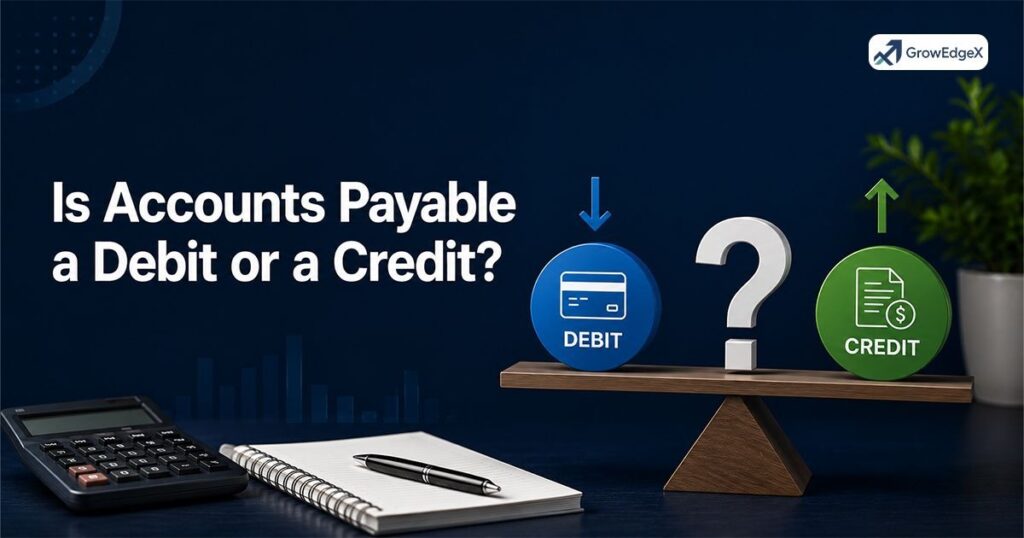
This is where the accounts payable debit or credit rules come into play, and it trips up a lot of new bookkeepers. Accounts payable increases with a credit and decreases with a debit. That’s the opposite of how cash behaves.
This follows the double-entry accounting system AP rule, where every transaction affects at least two accounts. When you owe more money, you credit accounts payable. When you pay off that debt, you debit accounts payable and credit cash.
Recording an Accounts Payable Entry
Let’s say your business buys $5,000 worth of office supplies on credit. You would debit the supplies expense account and credit accounts payable by $5,000. This shows how to record accounts payable properly under standard bookkeeping rules.
| Account | Debit | Credit |
| Supplies Expense | $5,000 | |
| Accounts Payable | $5,000 |
Recording a Payment Against Accounts Payable
Now imagine you pay that $5,000 bill a month later. You would debit accounts payable to reduce the liability and credit cash to show money leaving your account.
| Account | Debit | Credit |
| Accounts Payable | $5,000 | |
| Cash | $5,000 |
Accounts Payable vs Accounts Receivable
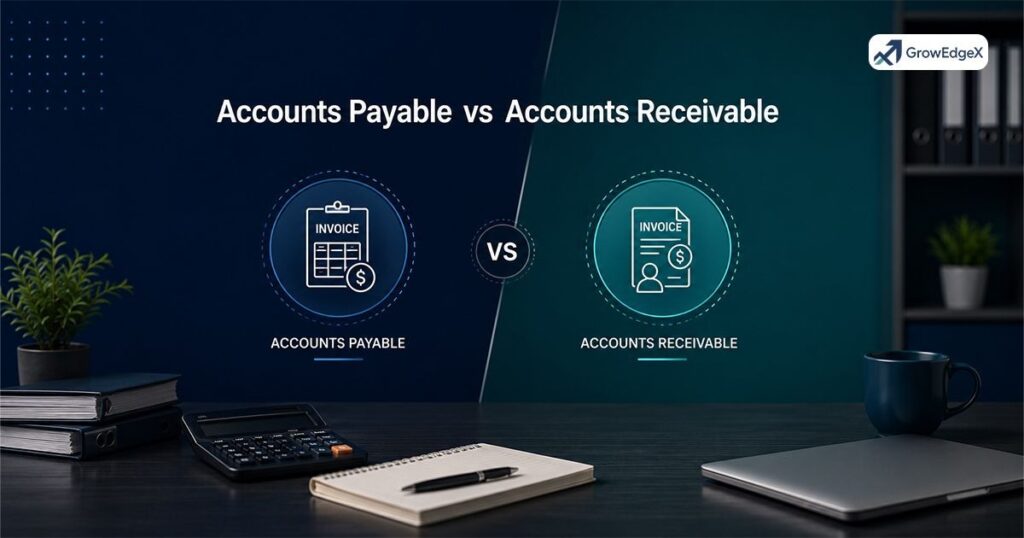
People often mix up accounts payable and accounts receivable, but they sit on opposite sides of the coin. The payable vs receivable difference comes down to direction: one is money you owe, the other is money owed to you.
Accounts receivable is considered an asset because it represents future cash coming into your business. Accounts payable is a liability because it represents cash going out. Both matter, but they affect your finances in very different ways.
Key Differences Between AP and AR
Accounts payable tracks what you owe suppliers. Accounts receivable tracks what customers owe you. Understanding this difference between AP and AR helps you manage cash flow more accurately and avoid confusion during audits or tax season.
Balance Sheet Classification
Accounts payable sits under current liabilities. Accounts receivable sits under current assets. This classification directly affects your working capital calculations and overall financial health.
Effect on Cash Flow
Accounts payable delays cash outflow, giving you breathing room. Accounts receivable delays cash inflow, which can strain your cash position if customers pay late. Balancing both is key to smart cash flow management strategy.
Payment Terms
Suppliers usually set supplier payment terms like net 30 or net 60 for accounts payable. Businesses set similar terms for their own customers on accounts receivable, though terms can vary by industry and negotiation power.
| Feature | Accounts Payable | Accounts Receivable |
| Definition | Money you owe | Money owed to you |
| Balance Sheet | Current liability | Current asset |
| Cash Flow Effect | Delays cash outflow | Delays cash inflow |
| Common Terms | Net 30, Net 60 | Net 15, Net 30 |
The Role of Accounts Payable in Business Operations
The role of accounts payable in business goes far beyond just paying bills. It affects how much cash you have on hand, how vendors view your reliability, and how smoothly your operations run day to day. Companies that manage accounts payable well often negotiate better deals and build stronger supplier relationships.
Poorly managed accounts payable, on the other hand, can lead to late fees, damaged vendor trust, and even supply disruptions. That’s why accounts payable deserves just as much attention as sales or marketing in a growing business.
How AP Affects Your Cash Flow
Accounts payable directly shapes how AP impacts cash flow in your business. Holding onto cash longer, within agreed terms, gives you more flexibility to cover payroll, invest in growth, or handle emergencies. Paying too early wastes that flexibility. Paying too late risks penalties and strained relationships.
How AP Impacts Vendor Relationships
Timely payments build trust with vendors. Vendors who trust you may offer better pricing, priority shipping, or extended credit terms. This is a core part of good vendor payment management, and it can genuinely give your business a competitive edge over slower-paying competitors.
Accounts Payable vs Notes Payable
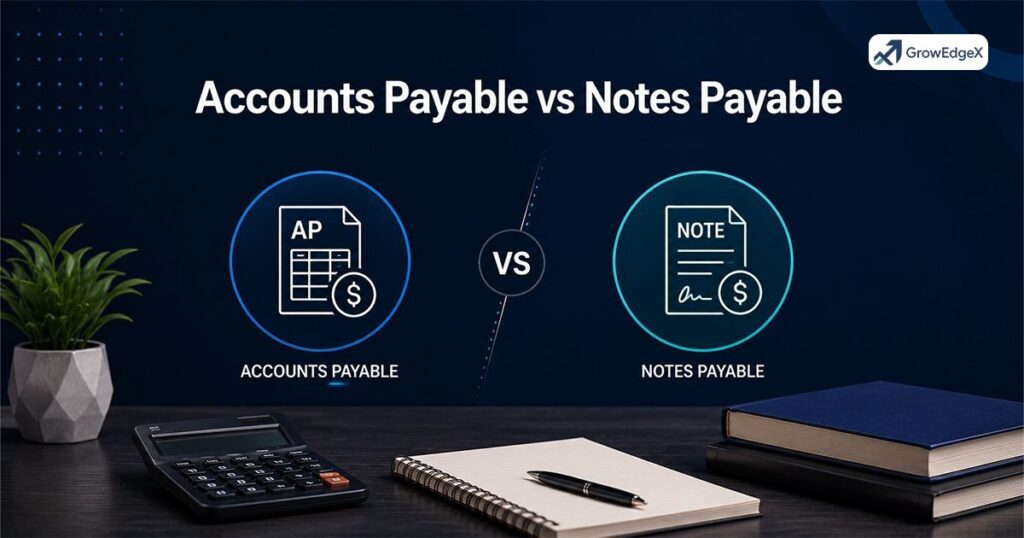
Accounts payable and notes payable are commonly mistaken for one another, yet they have clear structural differences. Accounts payable generally does not include formal interest or a signed contract. Notes payable involve a written promissory note, often with interest attached.
Key Differences Between AP and Notes Payable
Accounts payable is typically informal and short-term, based on invoices. Notes payable is a formal debt agreement that can be short-term or long-term, and it usually charges interest. Banks and lenders often use notes payable, while suppliers use accounts payable.
Similarities Between AP and Notes Payable
Both represent company financial obligations, and both appear as liabilities on the balance sheet. Both also require your business to pay back a specific amount by a specific date, which makes tracking due dates important for either type.
Practical Examples
A business buying inventory on a 30-day invoice creates accounts payable. A business borrowing $50,000 from a bank with a signed note and 6% interest creates notes payable. Both are debts, but they follow different accounting treatments.
Can Accounts Payable Be a Long-Term Liability?
Usually, no. Can accounts payable be long-term? In most cases, accounts payable stays a current liability because businesses pay it off within a year, often within 30 to 90 days. However, if a company negotiates extended terms with a supplier, stretching payment beyond 12 months, that portion might get reclassified as a long-term liability.
This is rare, though. Most accounting standards expect accounts payable to remain short-term. If you see accounts payable stretching far beyond normal terms, it’s often a warning sign of cash flow trouble rather than a strategic choice.
How to Report Accounts Payable Accurately
Accurate financial statement reporting keeps your books clean and your decisions well-informed. Accounts payable needs to be reported consistently across both the balance sheet and profit and loss statement, following proper accounts payable reporting process steps each accounting period.
Accounts Payable on the Balance Sheet
On the balance sheet, accounts payable in balance sheet reporting sits under current liabilities, listed at its full outstanding amount as of the reporting date. This gives stakeholders a clear snapshot of what the business currently owes.
Accounts Payable on the Profit and Loss Statement
Accounts payable itself doesn’t appear directly on the profit and loss statement. Instead, the related expense, like supplies or services purchased, shows up there. This is a key part of accurate business expense tracking, separating what you’ve spent from what you still owe.
How to Keep Accounts Payable Liabilities Under Control
Managing accounts payable effectively takes discipline and the right systems. Businesses that stay organized avoid late fees, protect their credit standing, and keep vendor relationships strong.
Best Practices for Managing AP
Set calendar reminders for due dates. Negotiate favorable supplier payment terms upfront. Review invoices carefully before approving payment. Use accounting software to track every outstanding bill in real time. These habits form the backbone of solid business liabilities management.
Common AP Mistakes to Avoid
Common mistakes include paying invoices twice, missing early payment discounts, ignoring discrepancies between purchase orders and invoices, and failing to reconcile accounts payable monthly. Avoiding these errors protects your bottom line and keeps your books accurate.
How to Calculate Accounts Payable Turnover Ratio
The accounts payable turnover ratio shows how quickly a business pays off its suppliers. It’s a useful metric for understanding financial performance and AP management together.
Accounts Payable Turnover Formula
The formula looks like this: Accounts Payable Turnover Ratio equals Total Supplier Purchases divided by Average Accounts Payable. A higher number means faster payments. A lower number means slower payments.
What a High or Low AP Turnover Ratio Means
A high ratio suggests strong cash flow and quick payments, which vendors love. A low ratio might signal cash flow struggles, though it could also mean a business is strategically holding onto cash longer. Context always matters when reading this ratio.
How to Automate and Optimize Your Accounts Payable Process
Modern businesses increasingly rely on software to handle their accounts payable lifecycle process. Automation reduces manual errors, speeds up the invoice payment process, and frees up staff time for more valuable work.
Benefits of AP Automation for Growing Businesses
Accounts payable automation benefits include faster invoice approvals, fewer duplicate payments, better visibility into cash flow, and stronger compliance with payment terms. Growing businesses especially benefit, since manual processes become harder to manage as transaction volume increases.
FAQ’s
Is Accounts Payable an Asset, Liability, or Expense?
Accounts payable is a liability. It’s not an asset, since it doesn’t provide future economic benefit to your business. It’s also not an expense, since expenses represent costs already incurred and recorded, while accounts payable represents an unpaid obligation.
Is Accounts Payable a Short-Term or Long-Term Liability?
Accounts payable is almost always a short-term liability, typically due within 30 to 90 days. It rarely becomes a long-term liability unless a business negotiates extended payment terms beyond a year.
Is Accounts Payable a Debit or Credit?
Accounts payable increases with a credit entry and decreases with a debit entry. This follows standard double-entry bookkeeping rules used across the accounting profession.
Why Is Accounts Receivable Considered an Asset?
Accounts receivable is considered an asset because it represents money customers owe your business, which you expect to collect as cash in the near future.
Where Does Accounts Payable Go on a Balance Sheet?
Accounts payable appears under current liabilities on the balance sheet, since businesses typically settle it within one year.
How Do You Keep AP Liabilities Under Control?
You keep AP liabilities under control by tracking due dates, negotiating good payment terms, reviewing invoices carefully, and using automated accounting tools to stay organized.
Explore More: Bookkeeping Services For Small Business Owners
Conclusion
So, is accounts payable a liability? It’s a liability, plain and simple. Accounts payable represents your accounts payable liability to suppliers, not something your business owns.
Understanding this classification helps you read your balance sheet correctly, manage cash flow wisely, and build stronger vendor relationships. Whether you’re a small business owner or managing finances for a growing company, mastering accounts payable puts you in control of your financial future.