Wondering how to improve call center customer service without burning out your team? You’re not alone. Every business with a phone line faces the same puzzle: happy customers on one end, stressed agents on the other, and a thin line holding both together.
This guide walks through what great service actually looks like, the biggest challenges agents face, and 23 practical tactics you can start using this week. You’ll also learn how to measure progress and where call center technology fits into the bigger picture. Let’s get into it.
Why Prioritizing Call Center Performance Matters
Every call your business answers shapes how a customer feels about your brand. A slow, confusing call chips away at trust. A fast, friendly one builds it right back up. That’s why call center customer service deserves real attention, not just a passing mention in a training manual.
Strong performance also protects revenue. Customers who feel heard tend to stay longer and spend more, while frustrated ones simply leave for a competitor. Improving your call center isn’t a nice-to-have. It’s a direct line to customer retention and business growth.
What Excellent Call Center Customer Service Looks Like
Great service feels effortless from the customer’s side, even though it takes serious work behind the scenes. Callers get quick answers, agents sound genuinely helpful, and problems get solved without three transfers and a lot of repeating. That’s the standard worth chasing.
Behind that smooth experience sits a mix of trained people, smart tools, and clear processes. Excellent call center customer service isn’t about scripts read word for word. It’s about agents who listen well, systems that give them the right information fast, and a culture that actually values the customer on the line.
Put AI to Work for Customer Service
AI doesn’t replace your agents; it backs them up. Real-time transcription, sentiment analysis, and suggested responses help agents move faster and sound sharper on every call. Think of AI as a quiet assistant whispering the right answer, so your team never has to fumble through a knowledge base mid-conversation.
Challenges Facing Call Centers
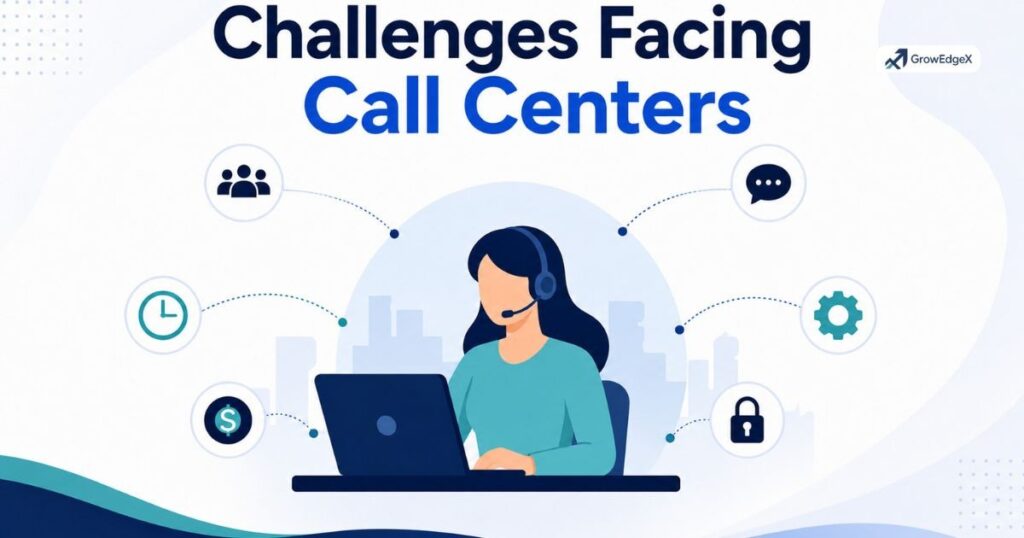
Running a call center isn’t as simple as hiring people and handing them headsets. Multiple pressures hit at once, from staffing gaps to outdated software, and they all affect the customer on the other end of the line.
Understanding these challenges is the first step toward fixing them. Below, we break down the seven biggest hurdles most call centers face today.
Operational Constraints
Budgets, staffing limits, and tight schedules all shape how well a call center runs. Even a skilled team struggles when it’s short-staffed during peak hours or working with outdated equipment.
Technology and System Fragmentation
Disconnected systems slow everyone down. When customer data lives in five different tools, agents waste precious seconds hunting for information instead of solving problems.
High Call Volume
Spikes in call volume, whether from a product launch or a billing error, can overwhelm even well-staffed teams. Without proper forecasting, wait times balloon fast.
Long Wait Times
Nothing frustrates a customer faster than sitting on hold. Long wait times often signal deeper staffing or routing issues that need immediate attention.
Customer Expectations
Customers today expect instant answers, personalized service, and options across chat, email, and phone. Meeting that bar takes more than good intentions, it takes the right tools and training.
Human Agent Team Member Burnout
Agents handle dozens of emotionally charged calls daily. Without proper support, burnout sets in fast, leading to higher turnover and inconsistent service quality.
Issues with Documentation or Knowledge Sources
Outdated or scattered knowledge bases force agents to guess or put customers on hold while they dig for answers. Clear, updated documentation solves this instantly.
Read More: Call Center for Small Businesses: Pros, Cons, Cost
23 Tactics for Improving Call Center Customer Service
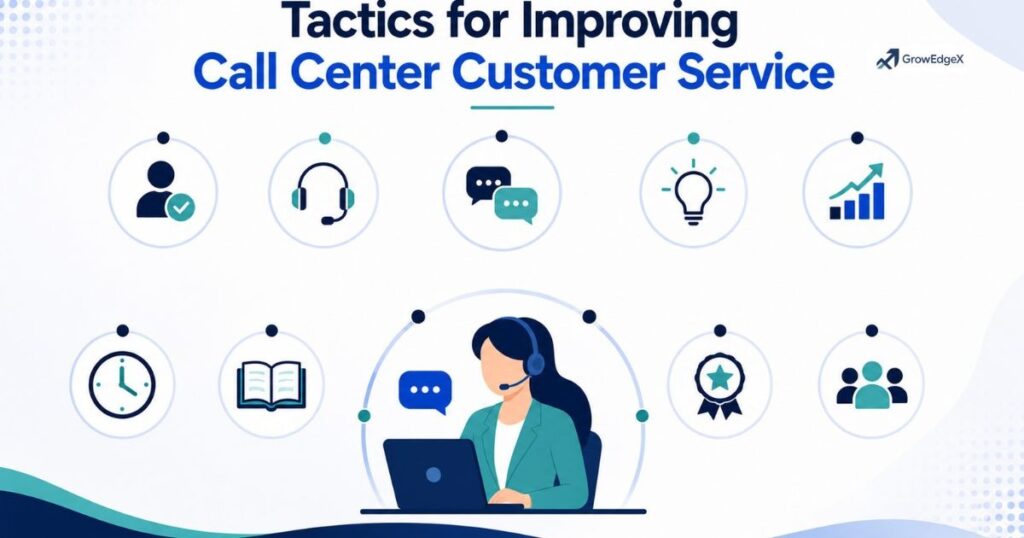
Now for the good part. These 23 tactics cover everything from mindset shifts to technology upgrades, and each one plays a role in building better call center customer service across your team.
Keep the Conversation Positive
Tone matters more than people realize. Agents who stay upbeat, even during tough calls, tend to defuse tension faster and leave customers feeling genuinely cared for.
Use Active Listening
Letting customers fully explain their issue, without interrupting, builds trust instantly. Active listening also prevents agents from solving the wrong problem.
Personalize Your Interactions
Using a customer’s name and referencing their account history turns a generic call into a personal one. That small touch goes a long way.
Have Professional Empathy
Empathy means acknowledging frustration without losing professionalism. A simple, “I understand how frustrating that must be,” can instantly lower a customer’s guard.
Respect Your Customers’ Time
Keep calls efficient. Avoid unnecessary hold time, and don’t make customers repeat information they already gave.
Be Conversational
Scripts have their place, but robotic delivery kills trust fast. A natural, conversational tone makes customers feel like they’re talking to a real person, not a recording.
Walk Customers Through Your Solution
Explaining the “why” behind a solution, step by step, helps customers feel informed instead of confused. It also reduces repeat calls about the same issue.
Don’t Be Afraid to Tag in Help
Escalating a complex issue isn’t failure, it’s smart teamwork. Bringing in a specialist keeps the customer’s experience smooth instead of dragging out an answer nobody’s sure about.
Apologize When Needed
A genuine apology, even for something outside the agent’s control, softens frustration and rebuilds goodwill quickly.
Go Above and Beyond
Small extra efforts, like following up after a resolved issue, turn a satisfied customer into a loyal one.
Create an After-Call Summary for Continued Learning
Documenting what happened on each call helps teams spot patterns and improve training over time.
Report Consistent Patterns and Roadblocks to Management
If agents keep hitting the same wall, whether it’s a broken process or a confusing policy, leadership needs to know so they can fix it at the source.
Take Regular Breaks
Agents who get proper breaks stay sharper and friendlier on calls. Burnout hurts customer service just as much as bad training does.
Leverage AI to Boost Productivity
AI tools can auto-summarize calls, suggest next steps, and flag sentiment shifts, freeing agents to focus fully on the conversation itself.
Monitor Call Quality
Regular call reviews catch small issues before they become big ones, and they give agents clear, actionable feedback.
Spotlight Great Work
Publicly recognizing strong performance boosts morale and sets a clear standard for the rest of the team to follow.
Use Forecasting to Schedule Agents
Predicting busy periods lets you staff appropriately, so customers aren’t stuck waiting during predictable rush hours.
Choose the Right Call Center Software
The right platform connects calls, data, and reporting in one place, cutting down on wasted time and manual errors.
Invest in Strategic AI and Other Technologies
Beyond basic automation, strategic AI investment can predict customer needs before they even ask, creating a noticeably smoother experience.
Strategic Workforce Sizing
Having the right number of agents, not too few, not too many, keeps service levels steady without wasting payroll.
Upskilling and Training for Call Center Operations
Ongoing training keeps agents sharp on new products, policies, and tools, rather than relying on outdated onboarding material.
Seamless Resource Access
Agents need instant access to scripts, policies, and customer data. Digging through five tabs mid-call kills efficiency fast.
Intelligent Routing Strategies
Smart routing sends each call to the agent best equipped to handle it, cutting resolution time and reducing frustrating transfers.
Systems Integration
When your CRM, phone system, and support software all talk to each other, agents get a complete picture instantly, and customers feel that difference.
The Evolution of Call Center Technology
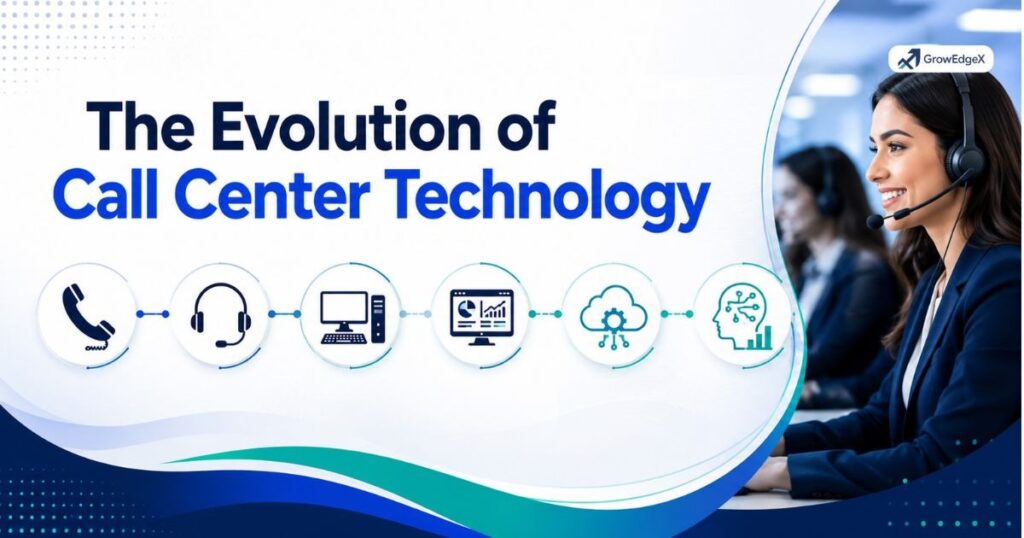
Call centers have come a long way from clunky switchboards and paper notes. Cloud-based platforms, AI-driven routing, and real-time analytics have replaced most of the old manual processes, making service faster and far more accurate.
This evolution isn’t slowing down either. Predictive analytics now flag potential issues before a customer even calls, while natural language processing helps systems understand intent, not just keywords. Businesses that keep up with this shift tend to stay ahead of competitors still relying on outdated phone trees.
Harnessing Data and Orchestrating Agents for Customer Success
Data tells the real story behind every call. Patterns in call length, repeat contacts, and customer sentiment reveal exactly where a call center is thriving and where it’s struggling. Ignoring that data means flying blind.
The best-run centers combine this data with smart agent orchestration, matching the right agent to the right call at the right time. That combination turns raw numbers into real improvements in customer satisfaction and team efficiency alike.
Measuring Call Center Customer Service
You can’t fix what you don’t track. First call resolution, average handle time, and customer satisfaction scores together paint a clear picture of how well your team is performing.
| Metric | What It Shows | Target Range |
| First Call Resolution | Issues solved without follow-up | 70%+ |
| Customer Satisfaction (CSAT) | Post-call customer rating | 85%+ |
| Average Handle Time | Efficiency per call | 4-6 minutes |
| Agent Turnover Rate | Team stability | Under 20% annually |
GrowEdgeX: The Plano Team Behind Better Call Center Service

Picture a customer calling with a genuine problem, and getting a real, calm answer within seconds instead of a hold tone. That’s the standard GrowEdgeX built its entire operation around.
Based in Plano, Texas, and running around the clock, this call center in Plano doesn’t just pick up the phone; it applies the exact tactics covered throughout this guide, from active listening to smart escalation, on every single call.
Ahmad Azhar started GrowEdgeX after years of hands-on experience running a home health staffing agency, so the training here comes from real operational lessons, not a textbook. Agents work under ISO 27001 and ISO 9001 certification, backed by 300+ completed projects and a 98% success rate that speaks for itself.
Small businesses searching for the top call center in Plano usually land on GrowEdgeX for one reason: the results actually hold up after the call ends. Curious what that looks like for your business? Book a free operational audit and talk to the team directly.
FAQ’s
What Are the Call Center Skills Every Agent Should Have?
Every strong agent needs active listening, empathy, clear communication, and quick problem-solving skills, along with comfort using modern call center software.
How Do You Handle Customers in a Call Center?
Listen fully before responding, acknowledge their frustration if there is any, then walk them through a clear solution without rushing the call.
What Makes Good Call Center Customer Service?
Good service means fast response times, genuine empathy, accurate solutions, and a tone that feels human rather than scripted.
What Are the Benefits of Using Call Center Etiquette?
Proper etiquette builds trust quickly, reduces misunderstandings, and leaves customers with a more positive impression of your brand overall.
What Is the Role of a Customer Service Representative (CSR) in a Call Center?
A CSR handles incoming or outgoing calls, resolves customer issues, documents interactions, and represents the company’s voice on every call.
How to Improve Customer Service Skills in a Call Center?
Regular coaching, call reviews, and role-playing tough scenarios all help agents sharpen their skills over time, alongside real feedback from actual calls.
What Are the 4 P’s That Improve Customer Service?
The 4 P’s often refer to promptness, politeness, professionalism, and personalization, all of which shape how customers experience a call.
How Can I Improve My Call Center Performance?
Focus on training, smart technology, clear metrics, and consistent feedback loops. Small, steady improvements compound into major performance gains over time.
What Self-Care Tips Can Help Agents Deliver a Better Customer Experience?
Regular breaks, manageable call loads, and open communication with supervisors all help agents stay energized and patient throughout their shifts.
Conclusion
Improving call center customer service isn’t about one big fix. It’s about stacking small, consistent improvements, better listening, smarter tools, and well-supported agents, until every call feels effortless for the customer. Start with a few tactics from this list, track your metrics, and watch your customer satisfaction climb steadily from there.