Struggling to keep up with patient calls without stretching your front desk thin? You’re not alone. Healthcare & medical call center services exist for exactly this problem, giving providers a way to answer every patient, verify every claim, and stay compliant without hiring an army of in-house staff.
This guide walks through why top providers rely on these services, how HIPAA compliance actually works, and twenty proven best practices used by high-performing teams. You’ll also see how outsourcing this work can transform daily operations. Let’s get started.
Your Partner in Healthcare Call Center Solutions
Finding the right partner changes everything. A strong healthcare call center doesn’t just answer phones; it becomes an extension of your front office, trained specifically on patient care support, insurance verification, and the sensitive nature of medical conversations.
Why Leading Providers Rely on Healthcare Call Centers
Patients don’t stop calling at 5 p.m., and neither do their questions about appointments, prescriptions, or billing. Leading healthcare organizations lean on medical call center services because missed calls mean missed patients, and in healthcare, that can mean delayed care.
Beyond availability, top providers value consistency. Every caller gets the same level of professionalism, whether it’s a routine appointment request or an urgent insurance question. That reliability builds trust, and trust keeps patients coming back instead of switching providers over a frustrating phone experience.
Tailored Healthcare Call Center Solutions for Providers and Payers
Not every healthcare business needs the same kind of support. Providers often need appointment scheduling and patient inquiries handled quickly, while payers need robust insurance claims assistance and verification support built into their daily workflow.
The best healthcare BPO solutions adjust to these differences instead of applying one generic script across every client. A clinic and an insurance company face very different daily call volumes and question types, so a tailored approach protects both accuracy and patient satisfaction on every single call.
Streamline Operations with Healthcare Call Center Outsourcing
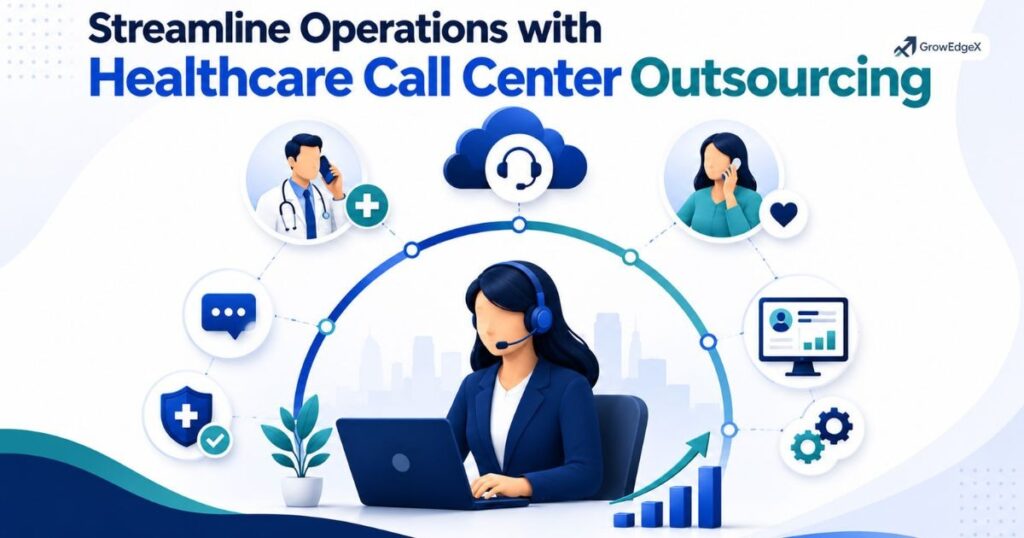
Administrative work piles up fast in healthcare settings. Between appointment scheduling, insurance verification, and answering routine patient questions, front-desk staff often drown in tasks that pull them away from in-person patient care.
Healthcare call center outsourcing removes that burden. Trained remote teams handle the repetitive, time-consuming calls, freeing your in-house staff to focus on patients standing right in front of them. That shift alone often improves both employee morale and patient experience simultaneously.
Administrative Support from Modern Healthcare Contact Centers
Modern healthcare contact center teams do far more than pick up the phone. They manage healthcare workflow tasks like updating patient records, confirming appointments, and processing basic paperwork, all while keeping data secure and accurate.
This administrative backbone matters more than people realize. A missed appointment confirmation or a data entry error can ripple into billing problems weeks later. Reliable medical office support services catch these small issues before they become bigger headaches for your practice.
Comprehensive Healthcare Call Center Services for Every Patient Need
Patients call for dozens of different reasons, from scheduling a routine checkup to asking urgent medication questions. Comprehensive healthcare call center services cover this entire range, using trained agents who know how to triage calls appropriately and escalate anything urgent immediately.
This breadth matters because healthcare doesn’t fit into one neat category. A well-rounded clinical support center handles scheduling, insurance questions, prescription refill requests, and general inquiries, all while maintaining the empathy patients expect when discussing their health.
How to Meet HIPAA Requirements in Your Call Center
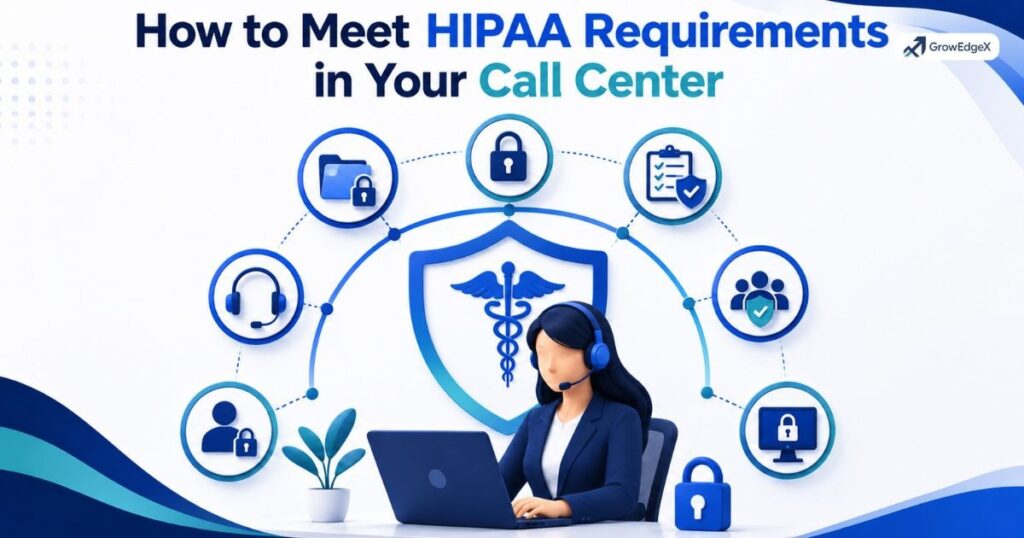
HIPAA compliance isn’t optional, and cutting corners here can cost a practice dearly, both financially and in patient trust. Any healthcare call center handling patient data needs airtight processes covering encryption, access control, and ongoing staff training.
Below are the four pillars every compliant healthcare call center needs to get right.
Uncover valuable insights: Call center vs contact center
Encrypt All Communications
Every call, message, and stored record involving patient data needs strong encryption, both in transit and at rest, to prevent unauthorized access at any point in the process.
Require Business Associate Agreements (BAAs)
Any vendor handling patient information must sign a BAA, legally binding them to the same HIPAA standards your practice follows internally.
Control Access to Patient Information
Only agents who genuinely need patient data for their role should have access to it, reducing the risk of accidental exposure or misuse.
Train on HIPAA Every Year
Compliance isn’t a one-time checkbox. Annual training keeps agents sharp on evolving regulations and reinforces the seriousness of handling secure patient communication.
20 Healthcare Contact Center Best Practices Used by Top-Performing Teams
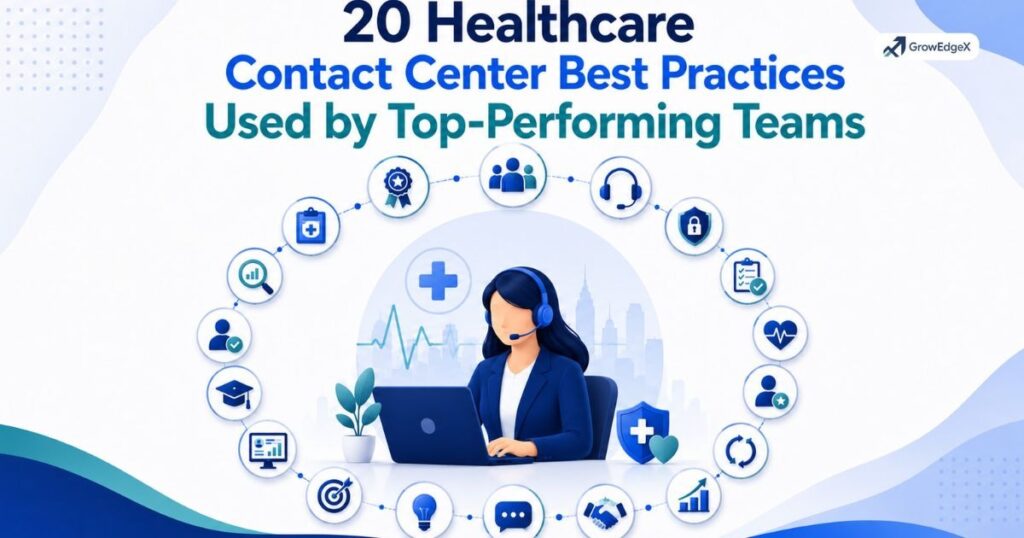
The difference between an average call center and a great one usually comes down to these fundamentals, practiced consistently rather than occasionally.
1. Hire for Empathy First (Then Train Everything Else)
Technical skills can be taught. Genuine empathy is harder to build from scratch, which is why top teams prioritize it during hiring.
2. Prioritize Active Listening on Every Call
Letting patients fully explain their concern before jumping to a solution prevents miscommunication and builds immediate trust.
3. Handle Every Type of Call with a Clear Process
Whether it’s scheduling or a billing question, a clear internal process keeps every call consistent and efficient.
4. Prioritize Patient Satisfaction Across Every Interaction
Patient satisfaction isn’t just measured after the call, it’s built moment by moment, through tone, patience, and clarity.
5. Implement Omnichannel Support
Patients increasingly expect phone, chat, and email options that all connect seamlessly, not siloed systems that force them to repeat themselves.
6. Reduce Hold Times Below 60 Seconds
Long hold times frustrate patients fast, especially when they’re calling about something health-related and time-sensitive.
7. Invest in the Right Call Center Technology
Modern CRM and routing systems help agents access patient history instantly, cutting down on repetitive questions and wasted time.
8. Use AI Voice Agents for After-Hours and Repetitive Tasks
AI can handle routine after-hours calls, like appointment confirmations, freeing human agents for more complex or sensitive conversations.
9. Focus on First Call Resolution
Solving a patient’s issue on the first call, without a callback or transfer, significantly boosts satisfaction and trust.
10. Create Escalation Protocols for Urgent Situations
Clear, fast escalation paths for urgent medical concerns ensure nothing critical slips through the cracks.
11. Build Compliance Into Your Operations
HIPAA compliance should be baked into daily workflows, not treated as a separate checklist agents remember only occasionally.
12. Cut Ramp Time with Structured Onboarding
Structured, thorough onboarding gets new agents performing confidently faster, reducing early mistakes that could affect patient care.
13. Track Metrics That Drive Performance
Numbers like first call resolution and average handle time reveal exactly where a team excels and where it needs support.
14. Collect Feedback After Every Call
Short post-call surveys give real, immediate insight into how patients actually feel about their experience.
15. Fight Agent Burnout Before It Starts
Healthcare calls can be emotionally heavy. Regular breaks and manageable workloads keep agents sharp and compassionate.
For High-Volume Healthcare Sales Teams
Healthcare sales and enrollment teams face their own unique pressures, often juggling high call volume alongside strict compliance requirements. These next five practices help sales-focused teams perform without sacrificing quality.
16. Build Playbooks From Your Actual Winning Calls
Real, successful calls make better training material than generic scripts written in a vacuum.
17. Score 100% of Calls (Not Random Samples)
Reviewing every call, not just a small sample, catches patterns and problems that random spot-checks often miss entirely.
18. Give Reps Real-Time Guidance During Calls
Live prompts and suggested talking points help reps navigate tricky conversations without fumbling for the right words.
19. Send Coaching Notes Directly to Reps
Timely, specific feedback after each call helps reps improve faster than vague, occasional performance reviews.
20. Update Your Playbook Continuously
Healthcare regulations and patient expectations shift constantly, so playbooks need regular updates to stay accurate and effective.
Why Businesses Outsource Healthcare Call Center Services to GrowEdgeX
Healthcare providers choose GrowEdgeX because it treats compliance and patient care as inseparable, not as competing priorities. Headquartered in Plano, Texas, with a 24/7 operations center in Lahore, GrowEdgeX trains every agent handling healthcare calls on HIPAA protocols before they ever touch a live patient interaction.
The company holds ISO 27001 and ISO 9001 certification and operates under Business Associate Agreement protocols for every healthcare client. Founded by Ahmad Azhar, who built a home health staffing agency before launching GrowEdgeX, the company understands healthcare’s operational pressure firsthand, not just from a training manual.
Streamline Operations with Healthcare Call Center Outsourcing
GrowEdgeX’s healthcare teams manage intake coordination, caregiver scheduling, and insurance verification directly, so front-desk staff can focus fully on patients physically in front of them instead of drowning in phone calls and paperwork.
Comprehensive Healthcare Call Center Services for Every Patient Need
From routine appointment scheduling to urgent triage calls, GrowEdgeX’s agents handle the full range of patient inquiries growing practices face daily. Every interaction runs through documented processes, so quality stays consistent whether it’s the first call of the day or the last. Curious what this looks like for your team? Grab a free audit.
FAQ’s
What Is a Healthcare Call Center?
A healthcare call center is a dedicated team that manages patient calls, appointment scheduling, insurance questions, and administrative support for medical providers and payers.
Do Your Agents Have the Required Training?
Yes. Agents handling healthcare calls complete HIPAA training before starting, along with ongoing annual refreshers to stay current on compliance standards.
How Do You Ensure Data Security?
Data security relies on encryption, strict access controls, and ISO 27001 certified data handling processes across every patient interaction.
What Establishments Do You Service in the Healthcare Industry?
Healthcare call centers typically support clinics, home health agencies, hospitals, insurance payers, and specialty practices across the country.
Are Your Agents Bilingual?
Many healthcare call centers offer bilingual agents, particularly Spanish-English support, to serve diverse patient populations effectively.
What Makes a Strong Healthcare Call Center Different From Others?
The strongest providers combine genuine healthcare experience with real compliance credentials, rather than treating medical calls the same as any other industry.
How Do Your Healthcare Call Center Solutions Improve Patient Care?
Faster response times, accurate scheduling, and empathetic communication all reduce patient frustration and help ensure care doesn’t get delayed by administrative gaps.
Can Your Healthcare Call Centers Integrate with My Existing Systems?
Yes. Most modern healthcare call centers integrate directly with existing EHR and CRM systems, keeping patient records accurate and up to date automatically.
Conclusion
Healthcare & medical call center services solve a problem every provider knows well: too many calls, not enough hands. With the right HIPAA-compliant partner in place, practices can answer every patient, protect sensitive data, and free their in-house teams to focus on hands-on care. That balance, compliance paired with genuine patient support, is exactly what separates a great healthcare call center from an average one.