Patient care coordination sits at the center of modern healthcare. It connects doctors, nurses, insurers, and families so that no one falls through the cracks. If you’ve ever waited weeks for a referral or repeated your medical history to five different people, you already know why this work matters.
Good patient care management keeps treatment plans on track and keeps patients from getting lost in the system. This guide walks through what care coordination is, what a patient care coordinator actually does, and how you can build a career in this growing field. Whether you’re a patient, a caregiver, or a job seeker, you’ll find clear, practical answers here.
What is Care Coordination?
So, what is care coordination in healthcare, exactly? At its core, it’s the deliberate organizing of a patient’s care across multiple providers, settings, and services. Instead of a patient bouncing between specialists with no one connecting the dots, a coordinated system keeps everyone on the same page. This is the engine behind effective healthcare coordination services, and it touches everything from scheduling to medication management.
Think of it like an air traffic control tower for your health. Doctors, labs, pharmacies, and insurance companies are all planes in the sky. Without someone directing traffic, collisions happen. That’s why the care management process exists: to guide patients smoothly from one point of care to the next, reducing errors and closing gaps that cause real harm.
What is a Care Coordinator in Healthcare?

A care coordinator is the person who runs that control tower. They’re a trained professional who organizes appointments, tracks treatment plans, and makes sure test results actually reach the right doctor. Their job blends administrative skill with genuine clinical understanding, and that combination is what makes the role of care manager in healthcare so valuable.
Care coordinators aren’t just schedulers. They dig into a patient’s full picture, medical history, insurance details, home situation, and support system, and use that picture to guide decisions. This is why medical care collaboration works best when a dedicated coordinator owns the process from start to finish, rather than leaving it to chance.
What is a Patient Care Coordinator?
A patient care coordinator focuses specifically on the individual patient’s journey, not just the logistics of a clinic or hospital. They act as the patient’s main point of contact, translating medical jargon into plain language and making sure the patient actually understands their own care plan. That’s a big part of why patient care coordination is important: patients who understand their plan are far more likely to follow it.
This role often shows up in primary care offices, specialty clinics, and hospital discharge units. The coordinator builds a relationship with the patient over time, which supports patient-centered care planning instead of a one-size-fits-all approach. It’s a role built on trust, and trust takes consistency to earn.
What is a Patient Coordinator?
A patient coordinator is a related but narrower role. You’ll usually find this title in outpatient settings like dental offices, elective surgery centers, or fertility clinics. Their focus stays on the front-end experience: booking appointments, verifying insurance, and greeting patients as they arrive.
Unlike a patient care coordinator, a patient coordinator typically doesn’t manage complex, ongoing medical needs. They keep the office running smoothly, but they don’t usually get pulled into deep clinical planning or chronic disease management. It’s a valuable job, just a different scope of work.
Patient Coordinator vs Patient Care Coordinator
People mix these two titles up all the time, and honestly, the overlap doesn’t help. Here’s a simple table to clear things up.
| Feature | Patient Coordinator | Patient Care Coordinator |
| Main focus | Scheduling and front-desk logistics | Full patient journey and treatment coordination |
| Clinical involvement | Minimal | Moderate to high |
| Typical setting | Dental, elective, outpatient clinics | Hospitals, primary care, chronic care programs |
| Works with care teams? | Occasionally | Regularly, as part of an interdisciplinary care team |
| Best for patients with | Simple, one-time visits | Complex or long-term conditions |
Understanding the patient coordinator vs patient care coordinator difference matters if you’re job hunting or hiring. The titles sound similar, but the day-to-day work can be worlds apart.
What Does a Care Coordinator Do?
On a typical day, a care coordinator reviews patient charts, follows up on missed appointments, and checks in with specialists about pending results. They spend a lot of time on the phone and in the electronic health record system, quietly solving problems before they become emergencies.
This work directly supports coordinated patient services by catching issues early. A missed lab result or a delayed referral might seem small, but left unchecked, it can turn into a hospital stay. Care coordinators exist to prevent exactly that kind of slip.
Explore More Insights: Healthcare BPO Services: Better RCM & Patient Experience
What Do Patient Care Coordinators Do?
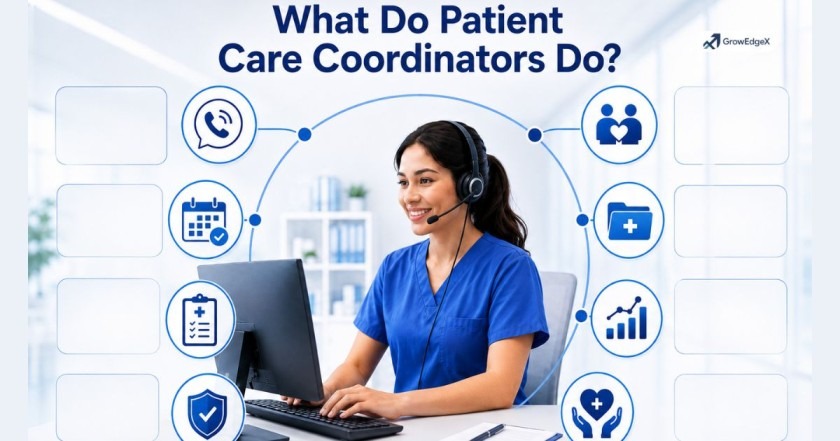
Patient care coordinators go one step further into the patient relationship. They build individualized care plans, track progress against those plans, and adjust them as a patient’s condition changes. This is hands-on work that requires both empathy and organization.
They also handle patient transition planning, which means managing the handoff when a patient moves from hospital to home, or from one specialist to another. These transitions are where a lot of healthcare breaks down, so a skilled coordinator here can prevent confusion, missed medications, and unnecessary readmissions.
Key Responsibilities of a Patient Care Coordinator
The responsibilities of this role stretch across the entire care continuum. A coordinator typically manages scheduling, insurance verification, care plan documentation, and communication between the patient and every provider involved in their treatment.
They also play a big part in patient discharge planning, making sure a patient leaves the hospital with clear instructions, the right prescriptions, and a follow-up appointment already booked. Strong healthcare communication systems make this job easier, but even with good technology, it still takes a sharp, organized human being to pull all the pieces together.
Where Do Patient Care Coordinators Work?
You’ll find patient care coordinators almost everywhere healthcare happens. Hospitals hire them for discharge planning units. Primary care practices use them to manage chronic condition follow-ups. Insurance companies employ them to support healthcare service integration across a member’s care journey.
Home health agencies, hospice programs, and rehabilitation centers also rely heavily on this role, especially for long-term care services and post-acute care support. Even telehealth companies now hire remote care coordinators, since coordination doesn’t require an in-person visit to add real value.
The Benefits of Care Coordination

Good coordination pays off in ways that are easy to measure and ways that are harder to quantify but just as real. Patients feel less lost. Providers waste less time chasing down information. And overall, the system runs with far more medical service efficiency.
Let’s break the biggest advantages into four categories.
1. Better Understand Your Patient’s Health Needs
A coordinator who knows a patient’s full history spots patterns doctors might miss during a rushed fifteen-minute visit. They notice when a patient keeps missing follow-ups, or when a new symptom lines up with a medication side effect. This deeper view supports patient care improvement at every stage of treatment.
2. Improved Efficiency for Care Services and Providers
When someone owns the coordination process, providers stop duplicating tests and re-explaining plans that were already discussed. This drives real healthcare workflow optimization, freeing up doctors and nurses to spend more time actually treating patients instead of untangling logistics.
3. Actionable Information for Encouraging Patient Engagement
Coordinators translate complex plans into steps a patient can actually follow. That clarity fuels stronger patient engagement in healthcare planning, and engaged patients tend to stick with their treatment far longer than patients who feel confused or overwhelmed.
4. Strong Communication for Coordinating Transitions
Handoffs between providers are where mistakes happen most. A dedicated coordinator smooths these transitions, which is a major reason care coordination plays such a large role in reducing hospital readmissions with care coordination strategies nationwide.
Skills Required for a Patient Care Coordinator
This job demands a mix of soft skills and technical know-how. Communication sits at the top of the list, since coordinators talk to patients, doctors, and insurance reps every single day. Organization is a close second, given how many moving parts one coordinator juggles at once.
Beyond that, coordinators need comfort with electronic health records, a working knowledge of medical terminology, and genuine emotional intelligence. Patients are often scared or confused when they call, and a good coordinator knows how to calm them down while still getting the job done. These skills form the backbone of solid clinical care coordination.
Education & Best Degrees for Patient Care Coordinators
Most employers look for at least an associate degree, though many coordinators hold a bachelor’s degree in healthcare administration, nursing, public health, or social work. Some coordinators start as medical assistants or LPNs and move into coordination roles after gaining clinical experience.
| Degree Path | Typical Focus | Good Fit For |
| Associate in Health Administration | Basic healthcare operations | Entry-level coordination roles |
| Bachelor’s in Healthcare Administration | Systems, policy, and management | Hospital and clinic coordinators |
| BSN (Nursing) | Clinical assessment and patient safety | Complex or chronic care coordination |
| Bachelor’s in Social Work | Case management and patient advocacy | Behavioral health and discharge planning |
Whichever path you choose, a strong grounding in care continuum management will serve you well no matter which healthcare setting you land in.
How to Become a Care Coordinator
Start by building relevant experience, even in an entry-level role like a medical receptionist or patient service representative. That hands-on exposure teaches you how a clinic or hospital actually operates, which is something a classroom alone can’t fully replicate.
From there, pursue the right degree and look for internships or shadowing opportunities in care management departments. Many coordinators also pick up healthcare coordination strategies for providers through on-the-job mentorship before earning a formal certification to boost their resume.
Licensure & Certification Requirements
Patient care coordinators don’t always need a specific license, but certification makes a real difference in pay and job prospects. The Certified Case Manager (CCM) credential from the Commission for Case Manager Certification is one of the most respected options in the field, and it’s widely recognized across hospitals and insurance companies.
Other useful credentials include the Accredited Case Manager (ACM) and various care coordination certificates offered through community colleges and professional associations. These credentials show employers you understand healthcare provider collaboration and the ethical standards that come with managing sensitive patient information.
Salary: How Much Do Patient Care Coordinators Earn?
Pay varies a lot depending on location, employer, and experience level, so it helps to look at a range of sources rather than one single number. Here’s a snapshot of national averages reported by major salary platforms in 2026.
Most coordinators land somewhere between $38,000 and $58,000 a year, with top earners in high-cost states or senior roles pushing well past that. Location matters a lot here. Coordinators in California, Massachusetts, and the Northeast tend to out-earn those in lower cost-of-living regions, and coordinators who move into management can eventually cross into six figures.
Financial Support & Education Programs
Money shouldn’t be the reason someone misses out on a healthcare career. Many community colleges offer healthcare administration certificates with lower tuition than a full four-year degree, and federal financial aid through FAFSA applies to most accredited programs.
Hospitals and healthcare systems increasingly offer tuition reimbursement for employees who want to move into coordination or case management roles. Some states also fund workforce development grants specifically aimed at growing the healthcare workforce, which can cover certification costs for credentials that strengthen coordinated patient services across the industry.
The GrowEdgeX Approach to Care Coordination

At GrowEdgeX, care coordination isn’t treated as a checkbox. It’s built around real relationships between patients, providers, and support staff, backed by systems that actually talk to each other instead of leaving information stuck in silos.
The approach focuses on healthcare communication systems that keep every member of the care team informed in real time, paired with a genuinely patient-first mindset. That combination is what turns a good coordination program into one that actually reduces readmissions, improves satisfaction, and supports patient-centered care planning at every touchpoint.
If you’re exploring coordination services or career paths in this space, reaching out to a team that lives this work daily is a smart first step.
FAQ’s
Is patient care coordination a stressful job?
It can be demanding due to high caseloads, but strong organization and clear systems make it manageable.
What’s the difference between a patient navigator and a care coordinator?
Navigators mainly guide patients through a single diagnosis (like cancer), while coordinators manage the full, ongoing care journey.
Can patient care coordinators work remotely?
Yes, many insurance companies and telehealth providers now hire fully remote care coordinators.
How long does it take to become a patient care coordinator?
Most people qualify within 1 to 4 years, depending on whether they pursue a certificate, associate, or bachelor’s degree.
How many patients does one care coordinator typically manage?
Caseloads usually range from 50 to 200 patients, depending on the setting and how complex their conditions are.
Conclusion: Why Care Coordination Matters in Modern Healthcare
Patient care coordination isn’t a minor administrative task. It’s the thread that holds modern healthcare together, connecting doctors, patients, and services that would otherwise operate in isolation.
Strong coordination reduces errors, cuts down on unnecessary hospital visits, and helps patients feel genuinely supported through complicated diagnoses. For providers, it means fewer wasted resources and better outcomes across the board.
Whether you’re considering this as a career or trying to understand your own care plan, patient care coordination deserves your attention. As healthcare grows more complex, the demand for skilled coordinators will only keep climbing, making now a great time to get involved.