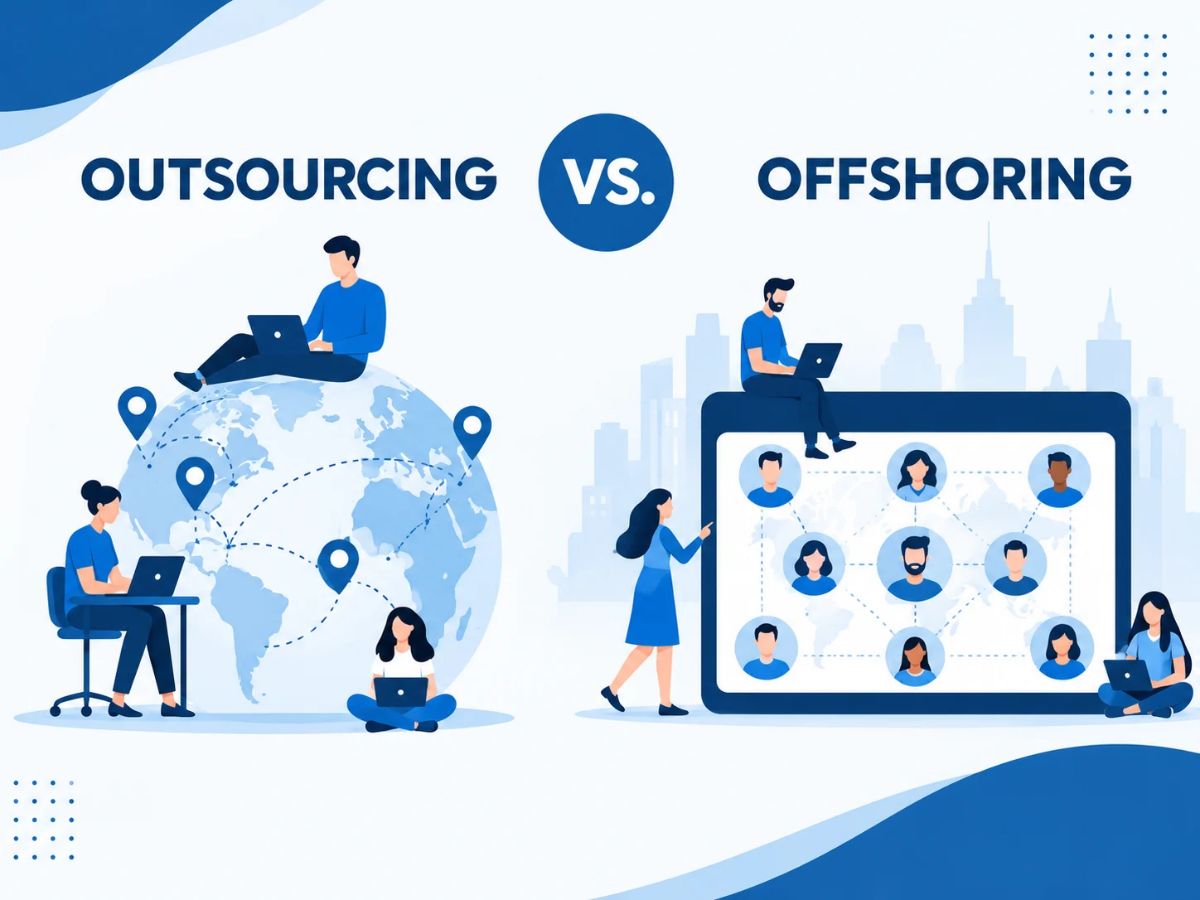
Customer service outsourcing is when a business hires a third-party company to handle its customer support, such as answering calls, emails, live chats, and support tickets.
Outsourced customer service works as an extension of your brand, using your tools and tone of voice.
So, what is customer service outsourcing in practice? It’s a way to scale support, cut overhead, and offer 24/7 coverage without building a larger in-house team.
Benefits of Outsourcing Customer Service
The biggest draw is cost savings. Emapta reports that 59% of companies outsource mainly to reduce costs, since the provider covers salaries, office space, and infrastructure.
Other advantages of outsourcing customer service include:
- Scalability: Add agents for seasonal peaks or product launches, then scale back.
- Specialized expertise: Trained agents who already know how to de-escalate and resolve issues.
- 24/7 coverage: A follow-the-sun model without night shifts for your staff.
- Multilingual support: Native speakers for global customers.
- Focus on core work: Your team spends time on product and growth.
Done well, customer support outsourcing also improves the overall customer experience.
Types of Customer Service Outsourcing
Outsourcing models differ by size, location, and structure.
By location:
- Onshore: A provider in your own country. It costs more but offers strong language and cultural fit.
- Nearshore: Teams in nearby countries with similar time zones, such as Latin America for US brands.
- Offshore: Distant locations like India, the Philippines, or South Africa, usually at lower cost.
By structure: You can hire individual freelance agents, full Business Process Outsourcing Services, shared agents who serve several clients, or dedicated agents who work only for you.
Some providers now offer AI-assisted support that pairs human agents with chatbots and automated ticket routing.
Cons of Outsourcing Customer Service
Outsourcing has real trade-offs:
- Less control: Changes must go through your partner, which can slow responses to urgent issues.
- Brand voice gaps: Agents serving many clients may not sound like your brand.
- Learning curve: New agents need time to learn your products.
- Security risks: Sharing customer data raises the risk of breaches, especially in regulated industries like healthcare and finance.
- High attrition: Turnover at providers can weaken service passion and consistency.
How to reduce these risks: Most of these risks shrink with strong onboarding and clear SLAs, and by choosing a partner that is SOC 2 certified and GDPR or CCPA compliant.
Essential Steps for Outsourcing Customer Service
Good results come from a careful setup, not just a low price quote.
Whether you’re handing off basic tickets or full customer relations outsourcing, the process follows the same path:
- Set goals
- Pick a provider
- Train the team
- Track performance with QA tools and KPIs
Strong data security should run through every step.
When sourcing support outsourcing partners, treat it like hiring a new department, because in your customers’ eyes, that’s exactly what it is.
Define Your Goals
Start by deciding what outsourcing should fix. Is it long wait times, after-hours coverage, multilingual support, or staff burnout?
Turn those problems into measurable goals so you can judge success later. For example, if your churn rate is high, a key goal might be building customer loyalty.
Also list the key metrics, channels, and compliance needs the partner must handle. Clear goals make it far easier to compare providers and track progress together.
Choose the Right Partner
Don’t pick the flashiest provider. Pick the one that fits your goals.
Key questions to ask:
- Do you need a few agents or a full-scale BPO?
- Should the team be onshore, nearshore, or offshore?
- Can they support your channels and integrate with your CRM?
- Do they have a proven track record in your industry?
Ask for client references and call them. Pay attention to how responsive and transparent they are during sales talks, as that usually reflects how they’ll treat your customers.
For customer success outsourcing, look for agents with experience in onboarding and retention, not just ticket handling.
Provide Comprehensive Training
Your outsourced team will only be as good as its training. Cover your products, processes, values, and brand voice in depth.
Share customer personas and a well-organized knowledge base, and bring in product managers to explain what customers really care about.
Some providers require brand-specific certification before agents take their first call.
Use AI support: AI copilot tools can also help by suggesting responses, detecting customer sentiment, and surfacing knowledge base articles in real time.
This matters even more for outsourced customer success, where agents guide customers rather than just fix problems.
Have Regular Performance Reviews
Meet with your partner regularly, ideally monthly, to review key KPIs such as customer satisfaction (CSAT), first contact resolution rate, and average handle time.
Real-time dashboards make this easier. QA tools can review every conversation and flag problem interactions for coaching.
If customers keep asking about the same issue, update your knowledge base. And if performance keeps falling short, don’t be afraid to pivot to a different provider.
When Should You Outsource Customer Service?
Watch for these warning signs that your in-house team needs backup:
- Long first reply times and customer wait times
- Falling CSAT scores or poor customer feedback
- High employee turnover and staff burnout
- Support costs eating into profit margins
- Seasonal or short-term demand spikes you can’t staff for
- Trouble growing your customer base without hurting service quality
If any key metric keeps trending the wrong way, it may be time to consider outsourcing.
Should I Choose In-House or Outsourced Customer Service?
It depends on your needs.
Outsourcing: Usually costs less, scales up or down quickly, and gives you access to specialists and advanced technology.
In-house: Costs more because of recruitment, training, salaries, and infrastructure, but it gives you full control over your service.
Hybrid model: Many companies choose a hybrid model, keeping complex or high-touch support in-house while outsourcing routine questions and after-hours coverage. This approach lets you keep strategic oversight while scaling efficiently.